 Save to Pinterest
 There's a moment in late autumn when the kitchen suddenly feels too warm for anything light, and that's when I first made this Persian beef barley soup at a friend's apartment in Tehran. The aroma alone—turmeric meeting fresh mint—made everyone stop talking and just breathe it in. I didn't have kashk that day, so I used sour cream instead, and somehow that mistake became the version I keep coming back to. It's the kind of soup that transforms a ordinary Tuesday into something worth remembering.
I made this soup for my mother-in-law's birthday dinner, and I watched her close her eyes after that first spoonful, the way people do when they're tasting home. She asked if I'd learned it from a Persian grandmother, and I laughed and admitted the truth—but the soup somehow spoke a language older than my recipe. That's when I understood this dish wasn't about following instructions perfectly; it was about the intention of bringing warmth to a table.
Ingredients
- Beef stew meat, 500 g cut into 2 cm cubes: The size matters more than you'd think; too small and it dissolves, too large and it doesn't cook evenly, so take a moment with your knife and aim for consistency.
- Pearl barley, 1/2 cup rinsed: Rinsing removes excess starch and prevents the soup from becoming gluey, a trick I learned after one particularly slimy batch.
- Dried lentils, 1/2 cup rinsed: These break down slightly as they cook, thickening the broth naturally without any cream or flour.
- Dried white beans or cannellini beans, 1/2 cup soaked overnight and drained: Soaking overnight isn't just tradition; it cuts cooking time significantly and makes them digest better.
- Large onion, 1 finely chopped: The foundation of flavor here; don't rush the browning step, as it builds a savory depth everything else rests on.
- Medium carrots, 2 diced: They soften into the broth but hold enough structure to be found in each spoonful.
- Celery stalks, 2 diced: Celery adds an herbal undertone that you won't consciously notice but will absolutely miss if it's gone.
- Garlic cloves, 2 minced: Mince it fine so it disperses evenly; chunks turn sharp and overwhelming as the soup cooks.
- Fresh parsley, 1/2 cup chopped: Added at the end to preserve its bright, clean taste and vibrant color.
- Fresh cilantro, 1/2 cup chopped: Some people skip this, but it's what makes this soup distinctly Persian, bringing an almost citrusy lift.
- Fresh dill, 1/4 cup chopped: Dill has this whisper-quiet flavor that somehow makes everything taste fresher.
- Fresh chives, 1/4 cup chopped: A subtle onion note that rounds out the herb blend without overpowering.
- Dried mint, 2 tbsp for garnish and fried onions: Split this between the fried onions and keep some for garnish; it's the star of the finish.
- Sour cream, 200 g: Swirled in at the end, it adds richness and a tangy cool contrast to the hot, herb-forward broth.
- Olive oil, 2 tbsp: Use good quality; you'll taste it in the final depth of flavor.
- Butter, 1 tbsp for fried onions: Butter browns the onions better than oil and gives them that golden, almost nutty finish.
- Ground turmeric, 1 tsp: Turmeric isn't just color; it brings an earthy warmth that's unmistakably Persian.
- Ground black pepper, 1/2 tsp: Freshly ground pepper, please; it makes a real difference.
- Salt, 1 1/2 tsp plus more to taste: Don't salt aggressively at the start; taste as it reduces and adjust near the end.
- Beef or vegetable stock, 2 liters: The quality of stock matters here; homemade is ideal, but a good store-bought broth works too.
Tired of Takeout? 🥡
Get 10 meals you can make faster than delivery arrives. Seriously.
One email. No spam. Unsubscribe anytime.
Instructions
- Sear the beef:
- Heat olive oil in a large pot over medium-high heat until it shimmers, then add beef cubes and resist the urge to move them around; let them sit for a couple minutes to develop a brown crust on each side. This takes about 5 minutes total and creates a savory foundation for everything else.
- Build the aromatic base:
- Remove the beef to a plate, add the remaining olive oil, and sauté your chopped onions until they turn a soft golden color, which should take around 6 minutes. Stir in the minced garlic, turmeric, black pepper, and salt, and let that cook for just a minute until the spices release their fragrance and fill your kitchen with that unmistakable Persian warmth.
- Add the vegetables:
- Toss in the diced carrots and celery and let them soften for about 3 minutes, stirring occasionally so everything cooks evenly. You're not trying to make them tender here; you just want them to start breaking down and blending with the aromatics.
- Combine and simmer:
- Return the beef to the pot and add the barley, lentils, soaked beans, and all that stock, then bring the whole thing to a boil before reducing the heat, covering the pot, and letting it bubble away gently for 1 hour and 30 minutes. Stir it every 15 minutes or so, just to make sure nothing sticks to the bottom and to check that everything's cooking evenly.
- Finish with fresh herbs:
- After the hour and a half is up, stir in all your fresh herbs—parsley, cilantro, dill, and chives—and let the soup simmer uncovered for 10 more minutes so they soften and their flavors meld into the broth. Taste it now and adjust the salt and pepper; this is your last chance to get it just right.
- Prepare the mint-fried onions:
- While the soup finishes, melt butter in a small skillet over medium-low heat and add your thinly sliced onion, then let it cook undisturbed for several minutes until it turns a deep golden brown and starts to crisp at the edges, which takes about 10 minutes. Stir in the dried mint for the last minute of cooking so it releases its aroma but doesn't burn.
- Serve with style:
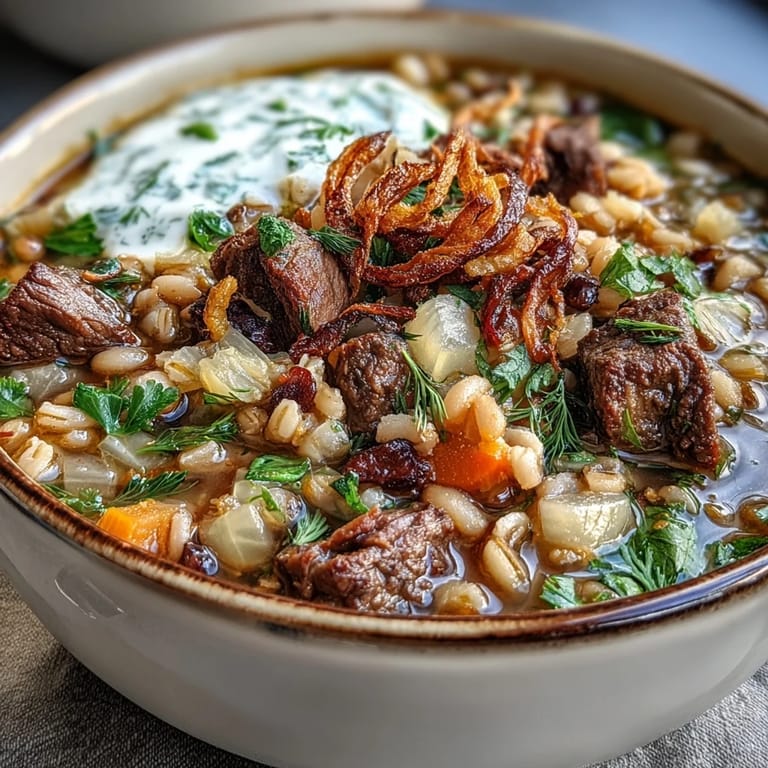
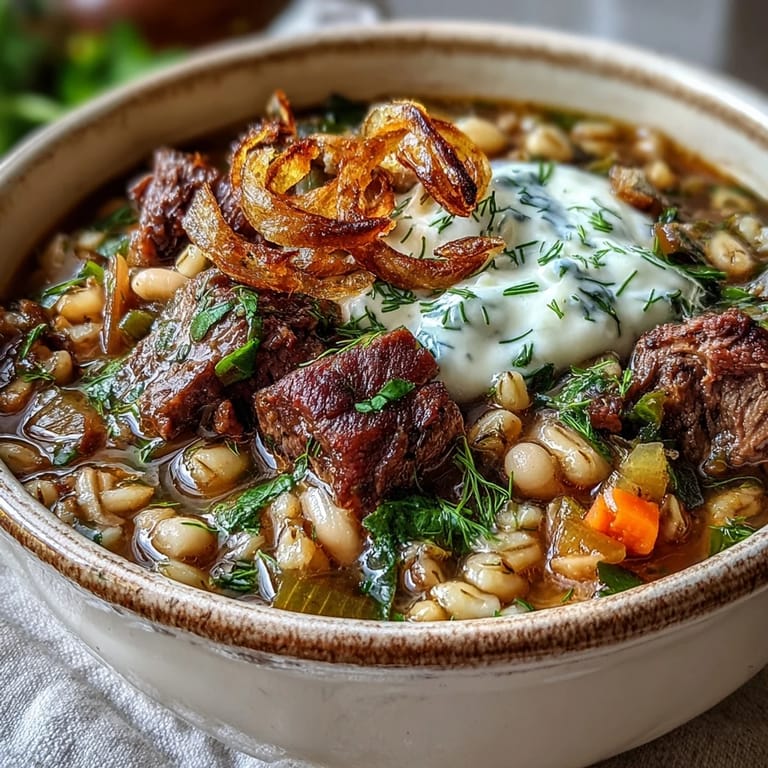
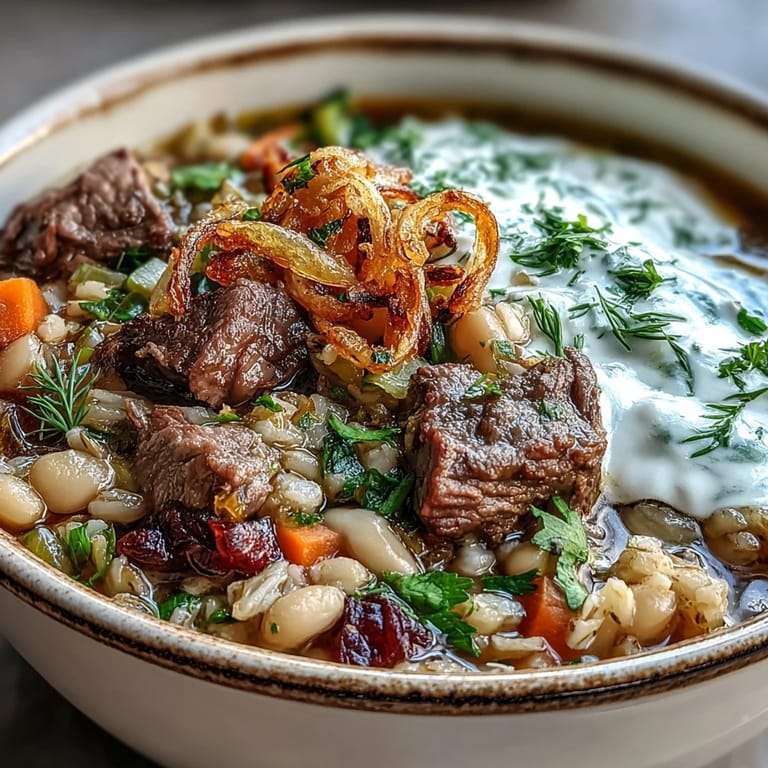
- Ladle the hot soup into bowls and swirl about 1 to 2 tablespoons of sour cream into each serving, then crown it with the fragrant mint-fried onions. The contrast of the cool, tangy cream against the warm, herb-forward broth is where the real magic happens.
 Save to Pinterest
 Years later, I served this soup to a colleague who grew up in Isfahan, and she told me it tasted like Sunday afternoons at her grandmother's table—which meant everything. Food doesn't have to be complicated to be meaningful; sometimes the most powerful meals are the ones that remind people of being home.
The Magic of Layered Flavor
What makes this soup feel so complete isn't any single ingredient but the way each element plays a role: the beef gives it body and richness, the legumes and barley add substance and texture, the vegetables provide sweetness and structure, and the fresh herbs at the end bring brightness and life. This layering is what makes the soup taste sophisticated without tasting fussy. The turmeric ties everything together with its earthy warmth, while the sour cream at the end acts like a reset button, cutting through the heaviness and making each spoonful feel fresh.
When to Make This and Why
This is a soup for when you want to feel like you're taking care of yourself or someone else, and for when the seasons shift and your body suddenly craves something warm and grounding. It works for weeknight dinners because once it's on the stove, you're mostly just waiting, and it's equally at home on a special dinner table where it becomes the main event. The recipe feeds 6 generously, or you can halve it for quieter days, and it reheats beautifully, which means you can make it on a Sunday and have it waiting for you on the harder days of the week.
The Details That Transform Everything
The difference between a good soup and a great one often lives in the small choices: taking time to properly brown the beef, not rushing the herb addition, and most importantly, that final swirl of sour cream and scatter of mint-fried onions. These aren't just garnishes; they're textural and flavor contrasts that make each spoonful interesting. If you're making this for someone who matters, don't skip the fried onions step, because that's where the love shows up.
- For a vegetarian version, omit the beef entirely and use vegetable stock, then add an extra 1/2 cup of beans or lentils to keep the protein content high and the soup hearty.
- If you can find kashk at a Middle Eastern market, substitute it for the sour cream for an authentically Persian finish that's tangier and more complex.
- Fresh herbs are essential here, not optional; if you can't find fresh cilantro or dill, use what you can find, but don't skip the parsley and chives, which are the backbone of the herb blend.
 Save to Pinterest
 This soup has a way of becoming part of your regular rotation once you make it, the kind of dish you think about when you're planning the week ahead. Serve it hot with crusty bread or Persian flatbread, and watch how it brings people together.
Recipe FAQs
- → Can I make this soup vegetarian?
Yes, simply omit the beef and use vegetable stock instead. The barley, lentils, and beans provide plenty of protein and substance to create a satisfying vegetarian version.
- → What is kashk and can I substitute it?
Kashk is fermented whey commonly used in Persian cuisine, offering a tangy, salty flavor. Sour cream makes an excellent substitute, though Greek yogurt or crème fraîche also work well for that creamy finishing element.
- → Do I need to soak the beans overnight?
Yes, soaking dried white beans overnight helps them cook evenly and prevents them from becoming tough or gritty during the long simmering process. If short on time, canned white beans can be added during the last 30 minutes.
- → Can I freeze this soup?
This soup freezes beautifully for up to 3 months. Cool completely before transferring to airtight containers. Add the sour cream and mint-fried onions freshly when reheating for best texture and flavor.
- → What bread pairs well with this soup?
Crusty artisan bread, baguette, or traditional Persian flatbread like sangak all complement the hearty texture. The bread helps soak up the rich broth and balances the tangy sour cream topping.
- → How can I adjust the consistency?
For a thicker soup, mash some of the cooked beans or barley against the pot side. If too thick, add more stock or water. The barley naturally continues thickening as it sits, so thin accordingly when reheating leftovers.