 Save to Pinterest
 I discovered this salad on one of those mornings when my kitchen window caught the sunlight just right, and a rainbow danced across the counter. It struck me that I'd been arranging salads for years, but always haphazardly, tossing greens into a bowl without intention. The Prism Burst changed that. It's a celebration of color that somehow tastes even better when it looks this deliberately beautiful, as if the effort itself makes the vegetables taste fresher.
My daughter once brought a friend home who'd been complaining about salad fatigue, and I decided to make this without warning. The moment the Prism Burst came to the table, she actually gasped. My daughter laughed and said, 'Mom finally figured out that you eat with your eyes first.' That comment stuck with me more than any compliment about taste ever could.
Ingredients
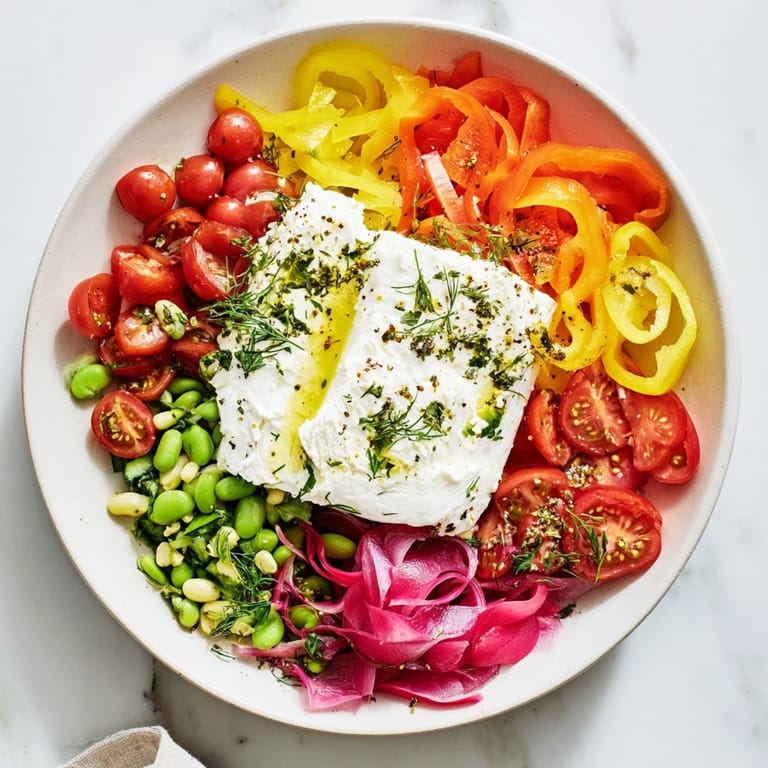
- Ricotta cheese: The creamy white center anchors the whole presentation and provides a cool, mild base that lets the vegetables shine without competing.
- Extra-virgin olive oil: Use good quality here—it's not hidden in a dressing, it's part of the star.
- Lemon zest: A whisper of brightness that wakes up the ricotta without making it taste lemony.
- Cherry tomatoes: Choose ones that are actually ripe; the difference between a good red layer and a mediocre one is whether they taste like summer.
- Bell peppers in red, orange, and yellow: Buy them firm and shiny; if they're wrinkled, they won't slice as cleanly for your fan.
- Cucumber: Slice it thin and as close to serving time as possible so it stays crisp.
- Corn kernels: Fresh or frozen both work, but if frozen, thaw and pat dry so they're not watery.
- Edamame: Cook them yourself if you can; they taste a world better than canned, and they add a quiet protein note.
- Blueberries and grapes: These create the blue and violet bands and add sweetness that balances the fresh vegetables.
- Purple cabbage: This is the secret to a true blue layer—finely shredded so it doesn't overpower.
- Radishes: They bridge blue and violet with their pink undertones and provide a peppery snap.
- Fresh herbs: Parsley, basil, or mint—choose whichever you have or love most, and add it last so it stays vibrant.
Tired of Takeout? 🥡
Get 10 meals you can make faster than delivery arrives. Seriously.
One email. No spam. Unsubscribe anytime.
Instructions
- Make your white center:
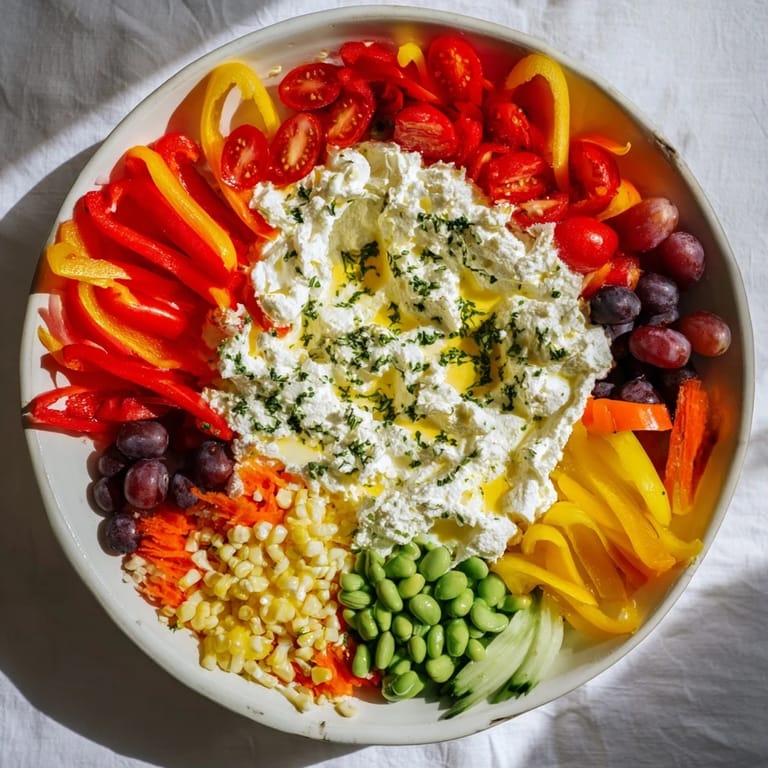
- In a small bowl, whisk the ricotta with olive oil, lemon zest, salt, and pepper until it's smooth but still slightly textured. Spoon it onto the middle of your serving platter and gently spread it into a small white circle—think of it as the foundation that everything else radiates from.
- Prep your colors:
- Arrange each color group in its own bowl before you begin fanning. This is not a step you can rush; when you're placing vegetables, you want them right at hand so the whole thing comes together quickly and stays fresh.
- Fan out from the center:
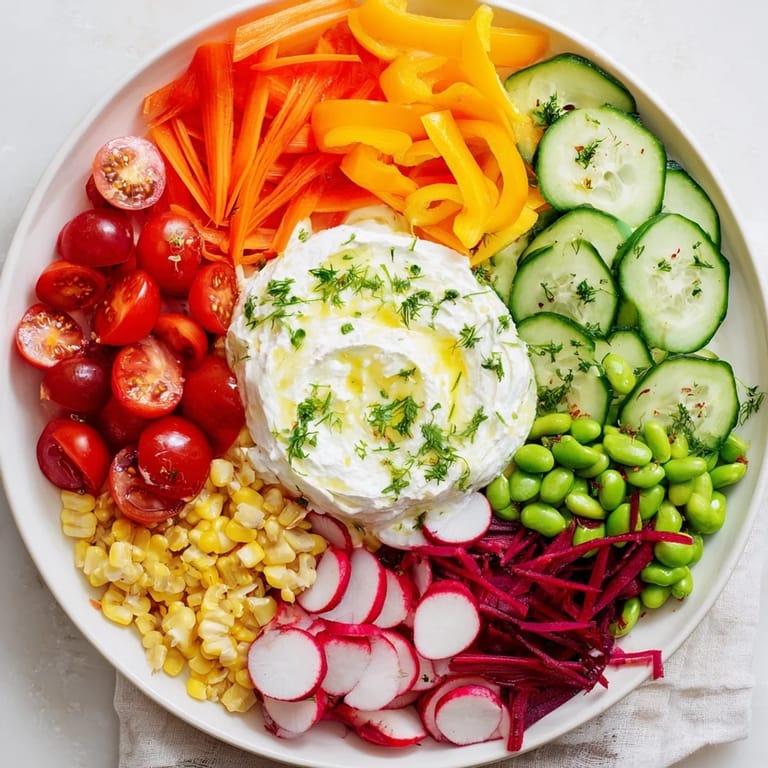
- Starting right where the ricotta ends, arrange your red tomatoes and peppers in a thin arc, then overlap the orange layer just slightly on top. Continue with yellow, then green, then blue, then violet, radiating outward like light through a prism. Use your hands or a small spoon to keep the colors distinct—overlapping just a touch creates those beautiful color gradients at the edges.
- Make your dressing:
- Whisk olive oil, lemon juice, honey, salt, and pepper in a small bowl until the honey dissolves. Taste it and adjust; it should taste bright but not overwhelming.
- Dress and serve:
- Drizzle the dressing lightly over the top just before serving, or pass it on the side so people can control how much they want. Either way, serve immediately while everything is still crisp and the colors are at their most vivid.
 Save to Pinterest
 There's something almost meditative about arranging this salad. My hands know what to do by the second time I make it, and my mind quiets down in a way that doesn't happen when I'm rushing through dinner prep. It became a ritual for me—something I make when I need to slow down, not because I have to, but because the process itself is the point.
The Beauty of Building
This salad teaches you that presentation isn't vanity—it's honesty. When you arrange vegetables by color, you're essentially organizing them by flavor and nutrition too. Reds and oranges are rich in lycopene and beta-carotene. Greens are where the iron hides. Blueberries carry antioxidants that make them worth their weight in gold. The prism shape isn't just visually stunning; it's a visible reminder that you're eating a spectrum of nutrients. Once you understand that, you can't help but make this salad more carefully than you'd make a tossed bowl.
Customizing Your Prism
The genius of this salad is that it's a framework, not a rule book. I've made versions in winter using shredded beets for red, roasted butternut squash for orange, and pomegranate seeds for the violet layer. Someone once told me they'd used thinly sliced mango for yellow and it sounded absolutely perfect. The key is respecting the color logic—pick vegetables and fruits that naturally fall into each band of the spectrum, and the flavor combinations tend to work out even if you've never made that exact combination before.
Why This Works as a Centerpiece
I started making this salad for dinners when I wanted something that looked like it came from a restaurant without requiring restaurant-level cooking skills. It's a dish that says 'I put thought into this' without needing you to roast anything or master a complicated technique. People ask for the recipe, they take photos, and then they actually enjoy eating it because it tastes as good as it looks. That's rarer than you'd think.
- For extra texture and protein, scatter toasted pumpkin seeds or pine nuts across the top just before serving.
- If you want to make it vegan, use coconut yogurt or cashew cream instead of ricotta for the white center.
- Edible flowers—pansies, nasturtiums, or viola—in the violet section turn this from beautiful into unforgettable.
 Save to Pinterest
 This salad reminds me that good food doesn't have to be complicated to be memorable. Sometimes the simplest gift you can give people is permission to enjoy something beautiful.
Recipe FAQs
- → What can be used as the central base for the salad?
Ricotta cheese or Greek yogurt creates a creamy white base, adding mild tanginess and smooth texture.
- → Can this salad be made vegan?
Yes, swapping ricotta for vegan cream cheese or plant-based yogurt makes it suitable for vegan diets.
- → What dressing complements the salad best?
A light dressing of olive oil, lemon juice, honey or agave syrup, and seasoning enhances the fresh flavors without overpowering.
- → How should the colors be arranged?
The salad layers fan out from the central base in order: red, orange, yellow, green, blue, and violet, creating a prism-like visual effect.
- → Are there optional add-ins for texture?
Toasted nuts or seeds such as pumpkin seeds, sunflower seeds, or pine nuts can add crunch and depth.
- → What herbs work well as garnish?
Fresh parsley, basil, or mint chopped and sprinkled on top complements the salad's freshness.