 Save to Pinterest
 My kitchen filled with the smell of roasting squash on a crisp October afternoon, and I realized this soup had become my answer to everything—when the weather turns cold, when someone needs comfort, when I want to feel like I'm doing something right. There's something about watching orange cubes caramelize in the oven that makes you believe autumn is happening exactly as it should. This butternut squash soup feels less like a recipe and more like a seasonal ritual that somehow landed in my repertoire.
I made this for my neighbor last November when her kitchen was being renovated, and watching her eat it straight from the bowl while standing in my kitchen told me everything I needed to know. She went quiet for a moment, and then asked for the recipe written down, which felt like the highest compliment possible.
Ingredients
- Butternut squash (1 large, about 1.2 kg or 2.5 lbs), peeled, seeded, and cubed: Roasting the cubes instead of pureeing raw squash is the secret—it concentrates the sweetness and adds depth that raw soup never quite achieves.
- Yellow onion (1 medium), chopped: The foundation of flavor; don't skip the step of letting it turn translucent because that's where the subtle sweetness comes from.
- Garlic (2 cloves), minced: Just enough to whisper in the background without shouting over the squash and spice.
- Vegetable broth (1 liter or 4 cups): Use good broth if you can; it's one of the few ingredients you really taste on its own.
- Water (250 ml or 1 cup): Dilutes the broth slightly so the squash flavor stays the star instead of getting buried.
- Coconut milk or heavy cream (120 ml or 1/2 cup): Adds richness and silkiness—coconut milk keeps it vegan and tastes surprisingly at home with the spices, while cream is more traditional.
- Pure maple syrup (2 tbsp): The real stuff matters here; it brings a subtle complexity that regular sweetener can't touch.
- Ground nutmeg (1/4 tsp) and ground cinnamon (1/2 tsp): These warm spices are what make people ask what you did differently, even though they're working quietly the whole time.
- Olive oil (2 tbsp total): Half goes on the squash for roasting, half goes in the pot for the onions and garlic.
- Salt and freshly ground black pepper to taste: The final adjustment that brings every other ingredient into focus.
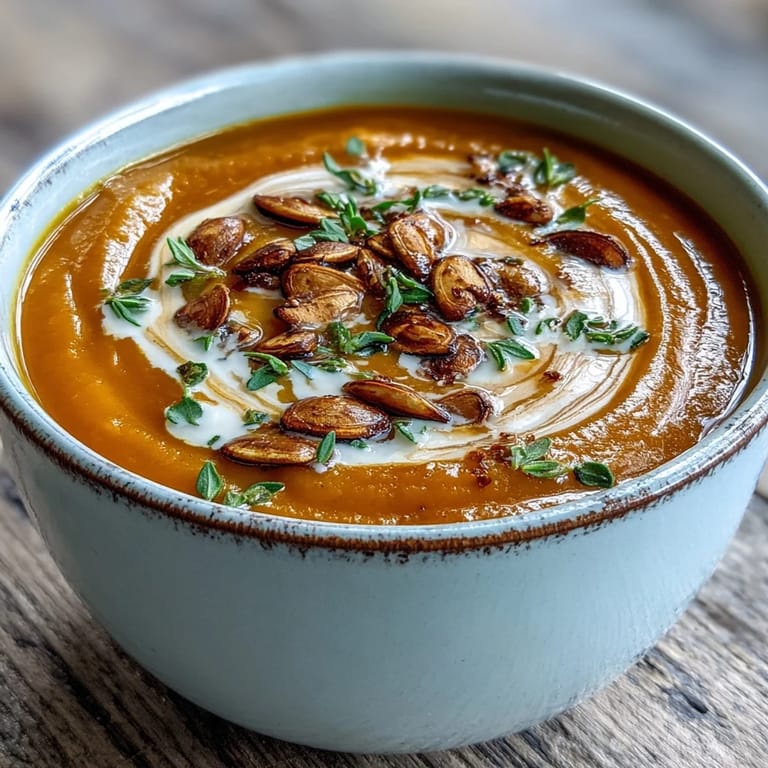
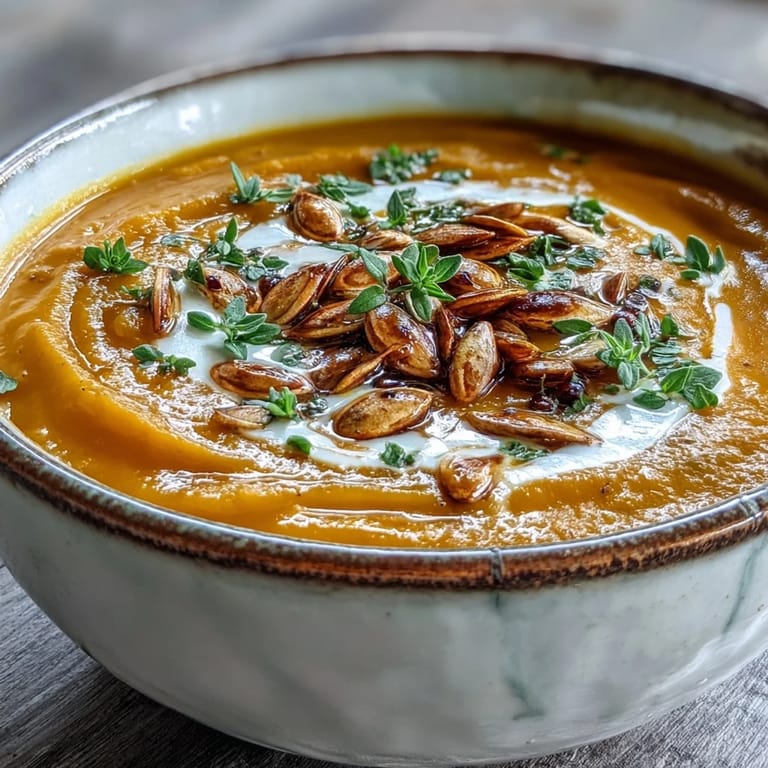
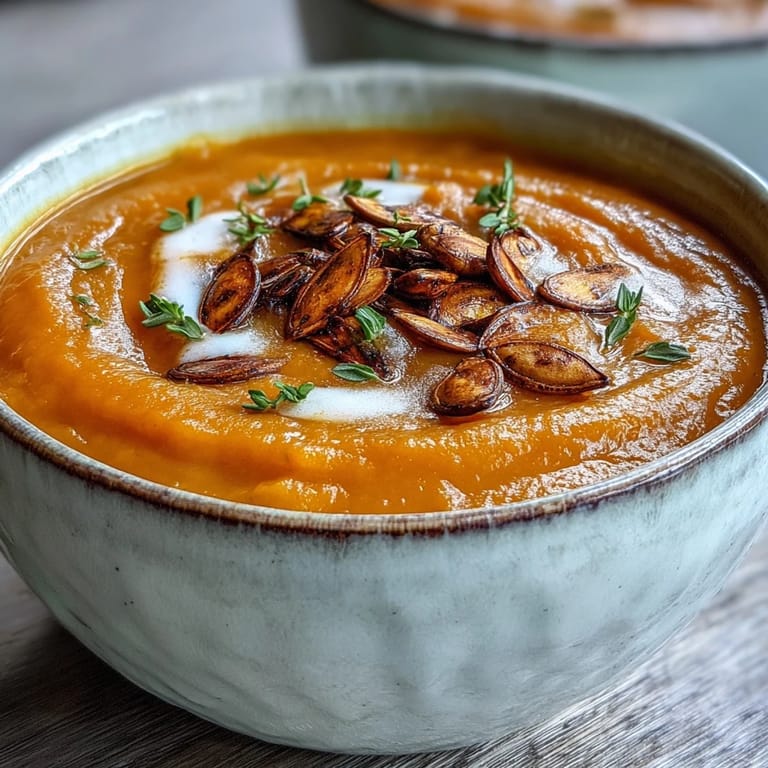
- Toasted pumpkin seeds, maple syrup drizzle, and fresh thyme (optional garnishes): These aren't just decoration—they add texture and freshness that make each spoonful interesting.
Tired of Takeout? 🥡
Get 10 meals you can make faster than delivery arrives. Seriously.
One email. No spam. Unsubscribe anytime.
Instructions
- Start the oven and prep your squash:
- Heat your oven to 200°C (400°F) and get your butternut squash cut and cubed—this is the most hands-on part, so tackle it first when you have energy.
- Roast the squash until golden and tender:
- Toss your cubes with 1 tablespoon olive oil, salt, and pepper, spread them on a baking sheet, and let them roast for 30–35 minutes, turning halfway. You'll know they're done when the edges are caramelized and a fork slides through easily.
- Build the flavor base:
- While the squash roasts, heat the remaining tablespoon of olive oil in a large pot over medium heat. Add your chopped onion and let it soften for 4–5 minutes until it turns translucent and slightly golden, then add the minced garlic and cook just long enough to smell it—about 1 minute.
- Bring everything together:
- Pour in your roasted squash, vegetable broth, water, maple syrup, nutmeg, and cinnamon. Give it a good stir so nothing sticks to the bottom, then bring it to a boil before lowering the heat to a gentle simmer for 10 minutes—this lets all the flavors get to know each other.
- Blend until silky:
- Using an immersion blender, puree the soup right in the pot until it's completely smooth and creamy. If you're using a countertop blender instead, work in batches and be careful with the hot liquid—never fill it more than halfway.
- Finish with cream and taste:
- Stir in your coconut milk or heavy cream, then taste and adjust the salt and pepper as needed. Some broths are saltier than others, so don't assume the seasoning is finished.
- Serve with intention:
- Ladle the soup into bowls and top with toasted pumpkin seeds, a drizzle of maple syrup, and a few fresh thyme leaves if you have them. Even without garnish, it's beautiful.
 Save to Pinterest
 There's a moment right after blending when the soup catches the light and looks like liquid gold, and that's when I know it's going to be good. My daughter once said it tasted like fall in a bowl, and I've been trying to recreate that exact observation ever since.
The Roasting Method Changes Everything
I learned the power of roasting by accident one year when I was in a rush and threw the squash in the pot raw. The soup was fine, but it was missing something—a depth, a caramelized sweetness that makes people come back for seconds. Roasting the squash first isn't extra work; it's the difference between a weeknight side dish and something people remember.
Making It Your Own
This soup is forgiving in ways that matter. If you want it richer, use cream instead of coconut milk and add a sprinkle of sage. If you want warmth and complexity, a pinch of cayenne pepper does something interesting to all the other flavors—it doesn't make it spicy, just more awake. Some people swear by a tiny splash of apple cider vinegar at the end to brighten everything up, and they're not wrong.
- For a vegan version, coconut milk works beautifully and adds its own subtle sweetness that complements the maple.
- Make it ahead and reheat gently on the stove—it freezes well for up to three months if you leave out the cream and add it fresh when you defrost.
- Serve with crusty bread or a simple green salad to balance the richness.
Why This Soup Works Every Time
The balance of sweet, savory, and spiced is something I've tinkered with for years, and the proportions here feel right. The maple syrup isn't heavy-handed; it just lifts the natural sweetness of the squash. The nutmeg and cinnamon don't fight each other—they work in harmony, each one knowing its place.
 Save to Pinterest
 This soup has become the way I mark the seasons, and making it never feels like a chore. There's something grounding about it—the way it warms you from the inside out and makes your kitchen smell like home.
Recipe FAQs
- → Can I make this soup ahead of time?
Absolutely. This soup actually develops deeper flavors when made ahead. Prepare it completely, then refrigerate for up to 3 days. Reheat gently over medium-low heat, stirring occasionally. Add a splash more broth if it thickens too much during storage.
- → What's the best way to achieve the smoothest texture?
Roasting the squash until completely tender and caramelized is key. Blend thoroughly using an immersion blender for 2-3 minutes, or work in batches with a high-powered countertop blender. For extra silkiness, strain the soup through a fine-mesh sieve after blending.
- → Can I substitute the maple syrup?
Honey or agave nectar work well as alternatives, though maple provides the most complementary flavor profile. For a naturally sweet version without added sweeteners, roast the squash longer to encourage more caramelization—the natural sugars will intensify beautifully.
- → How do I store and freeze leftovers?
Cool completely before transferring to airtight containers. Refrigerate for up to 4 days. For freezing, portion into freezer-safe bags or containers, leaving space for expansion. Freeze for up to 3 months. Thaw overnight in the refrigerator before reheating.
- → What can I serve alongside this soup?
Crusty bread, garlic knots, or warm dinner rolls complement the creamy texture perfectly. A crisp side salad with apple or pear echoes the autumn flavors. For something more substantial, grilled cheese sandwiches or roasted root vegetables make excellent pairing options.
- → How can I adjust the consistency?
For a thicker soup, reduce the water or broth by up to half a cup. To thin it, add more broth or water a quarter cup at a time until you reach your desired consistency. The soup will naturally thicken slightly as it cools, so keep this in mind when seasoning.