 Save to Pinterest
 I discovered this dish by accident while staring at my farmers market haul on a Tuesday evening, overwhelmed by the jewel tones in front of me. A golden beet caught the kitchen light next to a deep crimson one, and I thought: what if I let them create their own story on the plate? The contrast was so striking that I forgot I was making dinner and started thinking like I was composing something. That moment changed how I approach cooking vegetables entirely.
I made this for my sister's book club, thinking it was too simple, too show-offy, too something. Instead, the entire room went quiet the moment I set it down. Afterward, three people asked for the recipe, and one admitted she'd been intimidated to cook anything beautiful. Watching her realize that elegance doesn't require years of training was worth every carefully placed microgreen.
Ingredients
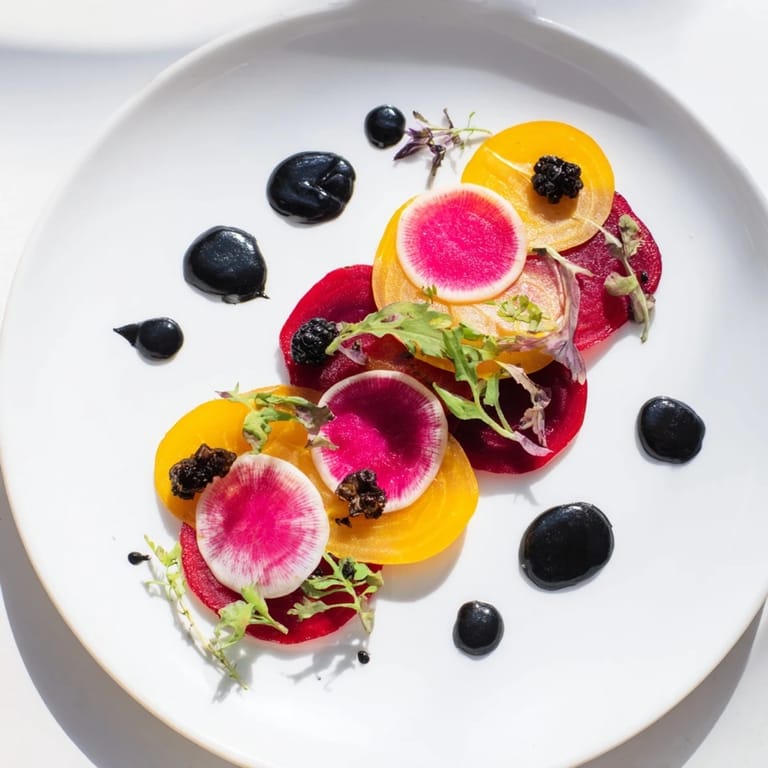
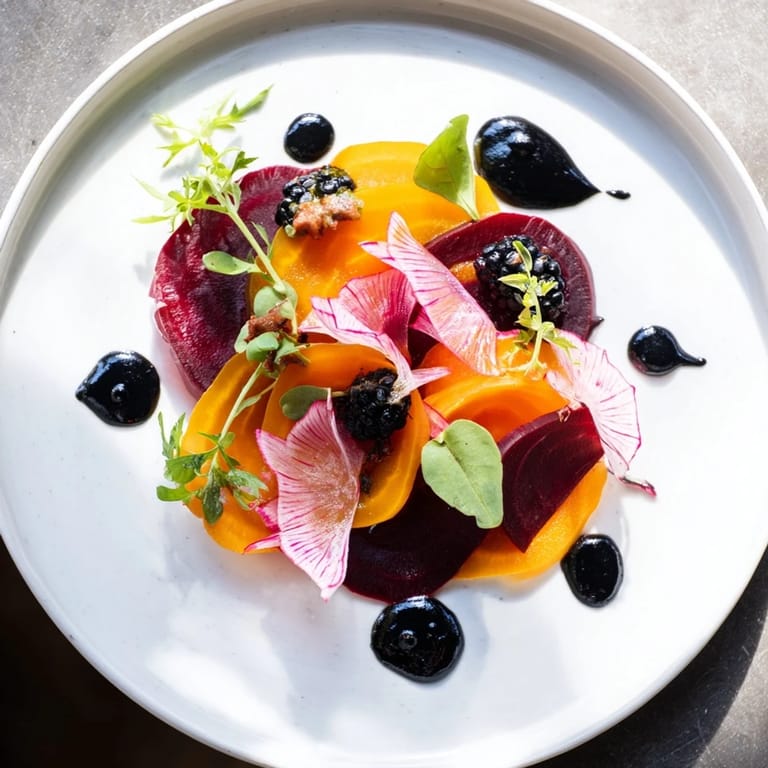
- Golden beet: Its buttery sweetness plays against the earthiness of the red, and the color is almost luminous on a dark plate.
- Red beet: Use the deepest one you can find; the earthiness anchors the whole composition.
- Watermelon radish: Those hidden pink and white stripes are the surprise that makes people lean in closer.
- Baby arugula: Keep it cold and dry, or it wilts and loses that peppery snap you need for contrast.
- Blackberries: They should be ripe but still hold their shape; overripe ones blur your shadows.
- Black olives: I prefer the ones with character, not the canned kind, though honestly any pitted olive works.
- Black tahini: This is your secret weapon for creating actual silhouettes; if you can't find it, regular tahini mixed with a tiny bit of squid ink transforms the whole plate visually.
- Extra virgin olive oil: Use one you actually enjoy tasting, because it's the only one doing the talking here.
- Lemon juice: Fresh squeezed changes everything; bottled will make you sad.
- Honey: A tiny drizzle ties the acidic and earthy notes together in a way that feels inevitable.
- Microgreens: These are the final conversation between light and shadow on your plate.
Tired of Takeout? 🥡
Get 10 meals you can make faster than delivery arrives. Seriously.
One email. No spam. Unsubscribe anytime.
Instructions
- Slice your beets like they matter:
- A mandoline makes this effortless, but a sharp knife and patience work just as well. You want them thin enough to see light through but thick enough to hold their color. I always wipe my hands between colors so the red doesn't stain the golden.
- Build your base layer:
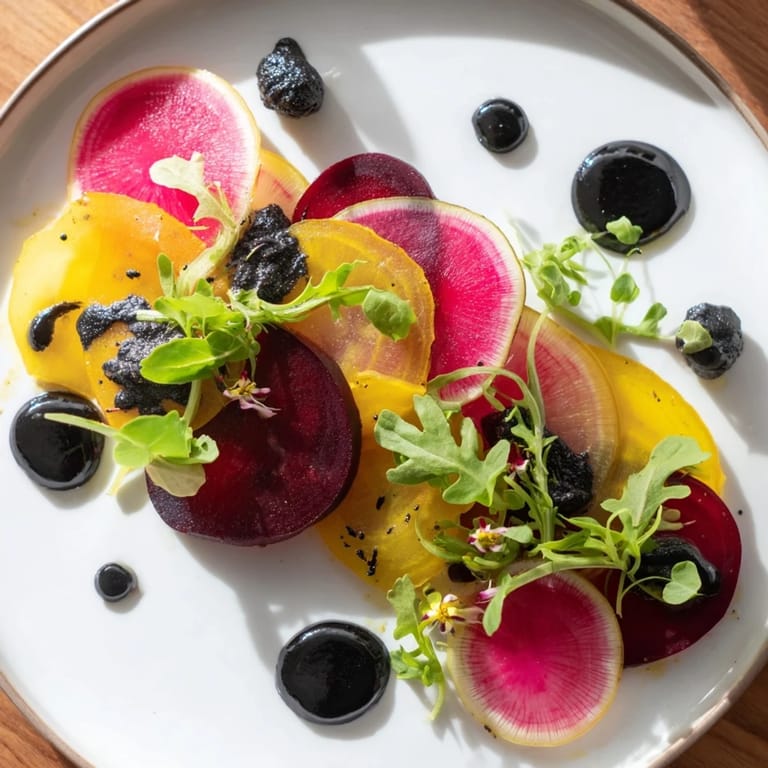
- Start with alternating beet slices in a gentle fan, letting them catch the light differently. This is where you decide if your plate is going to feel chaotic or composed.
- Bring in the brightness:
- Fan those watermelon radish slices over the beets like they're meant to be discovered. Scatter the arugula so some pieces curl and catch light, others nestle into shadows.
- Create the shadow effect:
- This is the moment where it stops being salad and becomes something intentional. Tuck blackberries and olives behind and under the bright ingredients so they create actual silhouettes when light hits the plate.
- Dress with restraint:
- Whisk oil, lemon juice, honey, salt, and pepper together, then drizzle it like you're painting. Too much and you lose the visual drama you just created.
- Add your dark poetry:
- Spoon black tahini around the plate, then drag the back of your spoon through it slightly to create smeared shadows. This is less about precision and more about intuition.
- Finish with intention:
- Top with microgreens and edible flowers if you have them. These final touches are what make someone remember eating this instead of just eating.
 Save to Pinterest
 My grandmother tasted this once and said it looked like something that belonged in a museum. She meant it as a compliment, but also gently suggested I remember that food is meant to be eaten, not just admired. She was right, but I think there's something nourishing about feeding both eyes and stomach at the same time.
The Geometry of Flavor
The real magic here is that visual drama comes from vegetables in their truest form. I'm not poaching or reducing or transforming anything; I'm just arranging what's already beautiful. The beets stay sweet and earthy, the radish stays crisp and peppery, and the arugula stays alive. It's a reminder that sometimes the best cooking is actually curation.
Playing with Your Plate
This dish teaches you to think about composition every time you cook. Once you start seeing food as shapes and shadows and light, regular dinner suddenly feels more intentional. I find myself doing this with roasted vegetables now, with grain bowls, even with breakfast plates. The discipline of it is quieting.
Making It Your Own
The foundation is beets and contrast, but everything else adapts to what you have and what you love. I've swapped the blackberries for roasted purple carrots, added beets chips for crunch, used different microgreens depending on the season. The frame stays, but the painting changes. Think of this as permission to improvise within structure, which is actually how I've learned to approach most things.
- If you can't find black tahini, regular tahini with even a tiny pinch of squid ink or activated charcoal (food grade) will create the shadow effect without changing the flavor.
- Prep everything ahead except the assembly; this is a dish that actually improves when you have time to breathe right before serving.
- Use a large platter rather than individual plates if you're serving multiple people; the scale changes how the composition reads.
 Save to Pinterest
 This dish taught me that sophistication doesn't require effort, just attention. It's become my answer when someone wants to cook something beautiful without spending all day in the kitchen.
Recipe FAQs
- → What types of beets are used in this dish?
Golden and red beets are thinly sliced to provide contrasting colors and flavors.
- → How is the shadow effect created?
Dark ingredients like blackberries, black olives, and black tahini are strategically layered behind bright vegetables to form dramatic silhouettes.
- → Can this dish accommodate dietary restrictions?
Yes, it's vegetarian and gluten-free. For vegan options, honey can be substituted with agave syrup.
- → What dressing complements the flavors?
A simple mix of extra virgin olive oil, lemon juice, honey, salt, and pepper enhances the fresh and earthy notes.
- → Are there any suggested garnishes?
Microgreens such as purple radish or basil and optional edible flowers bring extra color and freshness.
- → What tools are recommended for preparation?
A mandoline slicer or sharp knife ensures thin, even slices of beets and radishes for the best presentation.