 Save to Pinterest
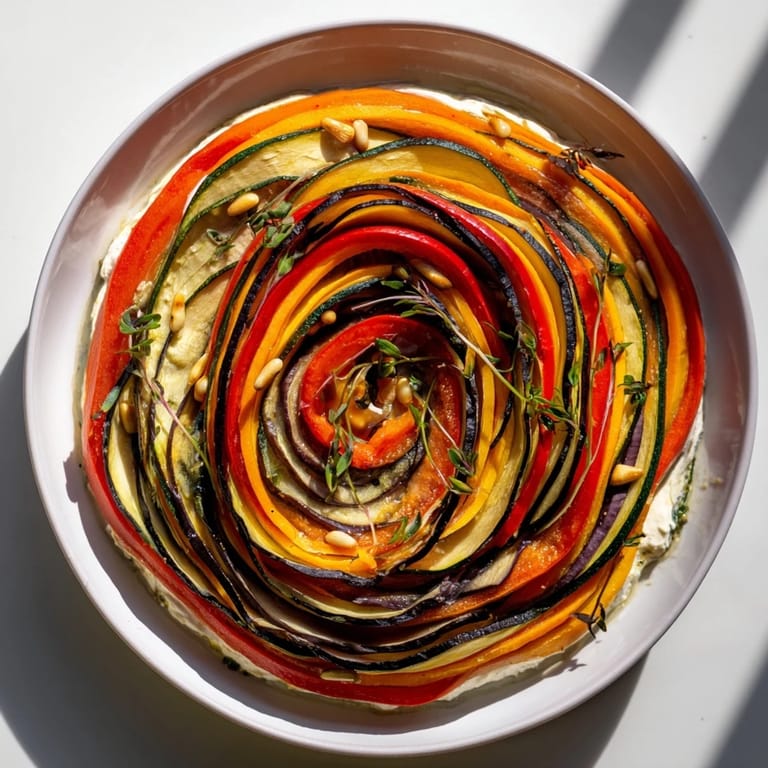
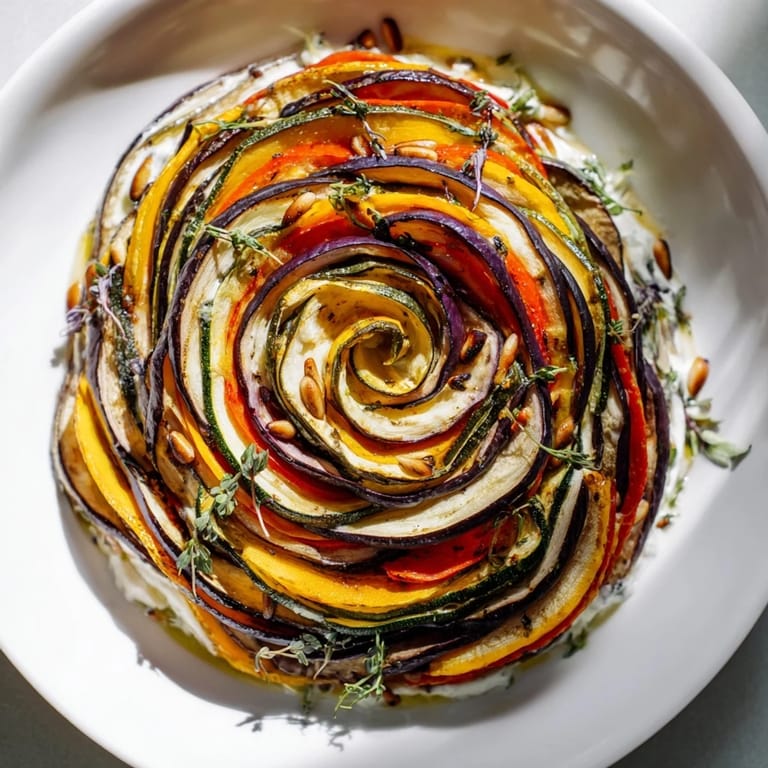
 I'll never forget the first time I plated a spiral dish at a dinner party—it was supposed to be simple, but watching my guests lean in closer, admiring the arrangement before even tasting it, changed how I thought about cooking. That night, I realized that food could be art, and art could nourish. This snail shell spiral became my signature way of bringing both beauty and flavor to the table, turning humble roasted vegetables into something that feels like you're unveiling a secret in the center of the plate.
I made this for my sister's birthday brunch last spring, and she cried—not because of the vegetables, but because she said it was the most thoughtful thing I'd ever made for her. That's when I understood: this dish isn't just about appearance or technique. It's about taking time, arranging things with intention, and telling someone they're worth the care.
Ingredients
- 1 small eggplant, thinly sliced lengthwise: The foundation of your spiral—eggplant has this wonderful ability to become silky and yielding when roasted, and it anchors the whole composition visually and texturally.
- 1 medium zucchini, thinly sliced lengthwise: Zucchini brings lightness and a delicate sweetness that balances the earthier vegetables around it.
- 1 red bell pepper, seeded and thinly sliced: This is your jewel—the brightness of red against the other vegetables is what makes people pause and really look at your plate.
- 1 yellow squash, thinly sliced lengthwise: Adds warmth and cheerful color that creates a natural flow through the spiral.
- 1 small carrot, peeled and thinly sliced lengthwise: Carrots hold their structure beautifully when roasted and add a subtle sweetness that ties everything together.
- 100 g goat cheese, softened: This is your canvas, your glue, your flavor anchor—make sure it's at room temperature so it spreads like silk.
- 2 tbsp crème fraîche: This makes the cheese mixture cloud-soft and luxuriously creamy without being heavy.
- 2 tbsp fresh basil leaves, finely chopped: Basil whispers herbal freshness that reminds you these are vegetables, not just decoration.
- 1 tbsp fresh thyme leaves: Thyme adds an understated earthiness that grounds the whole plate.
- 2 tbsp olive oil: Your roasting medium—use something you actually like the taste of, because every vegetable will carry its character.
- ½ tsp sea salt: Brings out the natural sweetness hiding in every vegetable.
- ¼ tsp freshly ground black pepper: A whisper of spice that makes people think they're tasting something more complex.
- 1 tbsp pine nuts, lightly toasted: Toast these yourself just before serving—the aroma alone is worth the extra minute, and they add a buttery richness and satisfying crunch.
- Microgreens, for garnish (optional): The finishing touch that says you care about the details.
Tired of Takeout? 🥡
Get 10 meals you can make faster than delivery arrives. Seriously.
One email. No spam. Unsubscribe anytime.
Instructions
- Heat your oven and prepare your stage:
- Preheat to 200°C (400°F) and line your baking tray with parchment paper. This is your moment to set the intention for the whole dish—a clean, hot oven is ready to work with you.
- Dress the vegetables with care:
- Lightly brush each slice with olive oil on both sides, then season with salt and pepper. This isn't about drowning them—just enough oil to kiss each piece and help them transform in the heat.
- Roast until they bend:
- Spread the vegetables in a single layer and roast for 10–12 minutes. You're looking for them to become pliable, tender enough to curve without cracking, but still holding their color. Remove them and let them cool on the tray—they'll continue to soften slightly as they rest.
- Make your creamy heart:
- In a bowl, mix the softened goat cheese, crème fraîche, basil, and thyme until smooth and cloud-like. Taste it. Adjust the salt and pepper if needed. This is the flavor that will anchor every bite.
- Spread your spiral foundation:
- On a large serving plate, start at the very center and spread the cheese mixture in a continuous spiral, moving outward in a gentle, confident motion. The spiral doesn't need to be perfect—slight irregularities make it feel handmade and honest.
- Build your edible spiral:
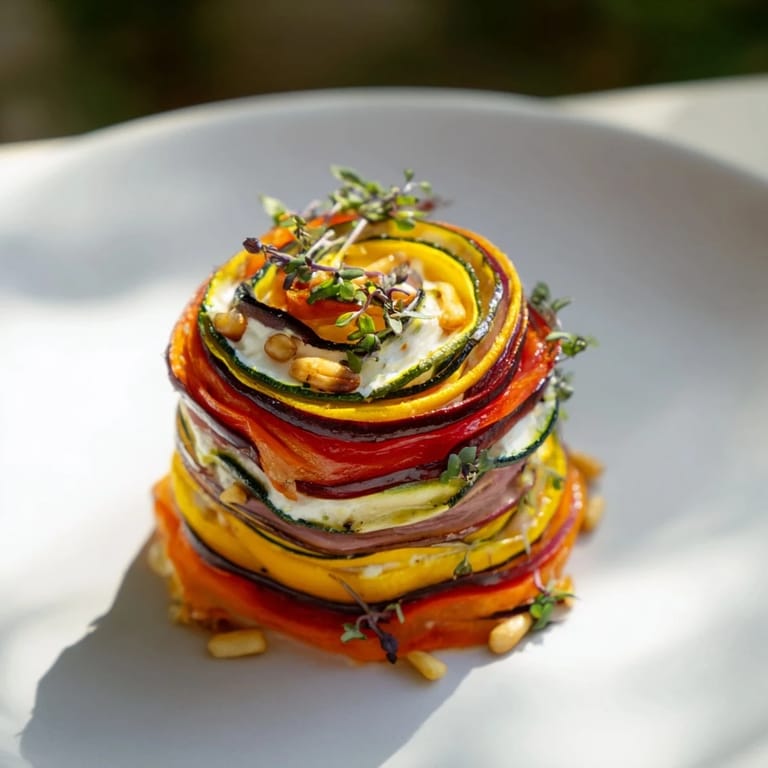
- Beginning at the center where you started the cheese, arrange the cooled vegetable slices, overlapping them slightly like shingles on a roof. Alternate the colors as you wind outward—eggplant, zucchini, red pepper, yellow squash, carrot, then repeat—letting the pattern guide the eye through the spiral.
- Crown your creation:
- Sprinkle the toasted pine nuts across the spiral and finish with microgreens if you have them. Step back and look at what you've made.
- Serve and savor:
- Bring this to the table at room temperature. Let people see it whole for a moment before serving—sometimes the presentation is part of the meal.
 Save to Pinterest
 My grandmother always said that the most important ingredient in any dish was attention. This spiral taught me exactly what she meant. The first time I made it, I was rushed, and it looked sloppy. The second time, I slowed down, paid attention to each slice, each color transition, and suddenly it became what I'd imagined. That's when I realized: this dish isn't difficult because the techniques are hard. It's beautiful because you give it time.
Making It Your Own
Once you've made this spiral once, you'll start seeing variations everywhere. Try adding thin slices of roasted beets for a deep, jewel-like burgundy, or sweet potato for warmth and a subtle sweetness that plays beautifully with the goat cheese. Some of my friends have added roasted mushrooms, paper-thin tomato slices, or even a whisper of roasted garlic folded into the cheese mixture. The structure stays the same—it's the vegetable palette that becomes your canvas.
Serving and Pairing
This spiral is perfect as an appetizer that makes people slow down and pay attention, but it's equally at home as a light lunch alongside crusty bread or fresh crackers. I've served it at room temperature, which is when all the flavors are most expressive, but I've also brought it straight from a gentle warming in the oven and watched people's faces change at how different it tastes when warm. Pair it with a crisp white wine, a light rosé, or even a sparkling water with fresh herbs—let the vegetables and their delicate flavors take center stage.
Making It Vegan or Dairy-Free
If dairy isn't in your world, substitute the goat cheese and crème fraîche with a plant-based cheese spread or cashew cream. Blend soaked cashews with lemon juice, garlic, and herbs to create something creamy and rich that plays the same role in the dish. The spiral's magic isn't about any single ingredient—it's about the layering, the colors, the intention you pour into arranging it. That works just as beautifully without dairy.
- Nutritionally, this dish is naturally lean and vegetable-forward, making it feel indulgent while being genuinely nourishing.
- The entire dish comes together in less time than it takes to order delivery, but looks like you've been planning it all day.
- Remember: the confidence with which you plate it matters more than perfect execution—trust yourself, and your guests will too.
 Save to Pinterest
 This spiral is a reminder that cooking doesn't have to be complicated to be beautiful, and beautiful food tastes better because someone cared enough to make it that way. Every time you arrange it, you're not just making dinner—you're creating a moment worth remembering.
Recipe FAQs
- → What vegetables work best for this spiral arrangement?
Thinly sliced eggplant, zucchini, bell pepper, yellow squash, and carrot are ideal for layering and creating a colorful spiral.
- → How should the vegetables be prepared before arranging?
Lightly brush the slices with olive oil, season with salt and pepper, then roast until pliable but not browned to make them easier to shape.
- → What cheese mixture complements the vegetable spiral?
A blend of softened goat cheese, crème fraîche, fresh basil, and thyme gives a creamy, herbed base that enhances the veggies' flavors.
- → Can this dish be served warm or cold?
It's best served at room temperature, allowing the flavors to meld and the textures to shine without losing the spiral's shape.
- → Are there garnish recommendations for added texture?
Toasted pine nuts provide a satisfying crunch, while microgreens offer a fresh, delicate finish.
- → Is there a way to make this preparation vegan-friendly?
Substitute the goat cheese and crème fraîche with a plant-based cheese spread to maintain creaminess without dairy.