 Save to Pinterest
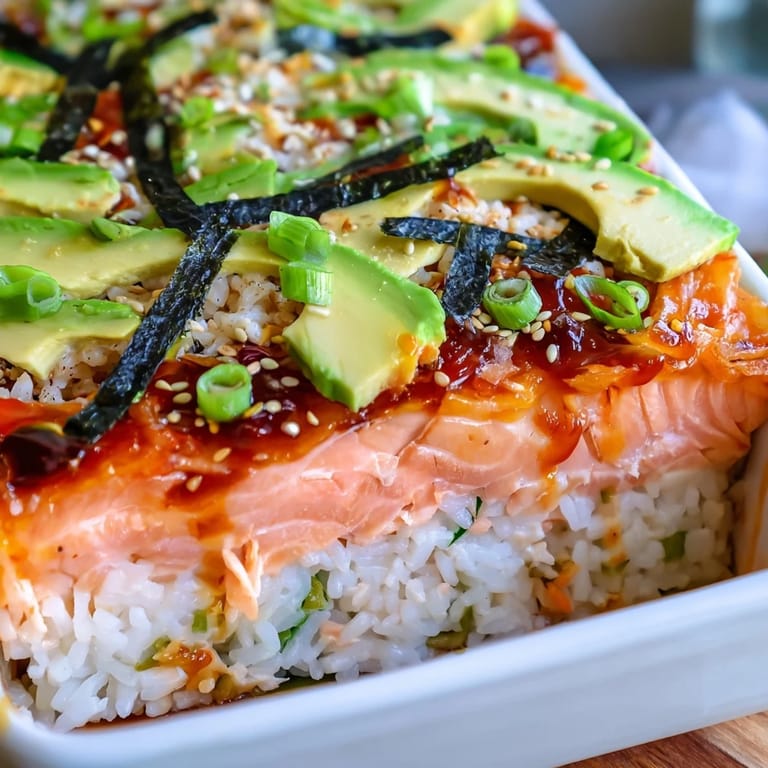
 My friend texted me a photo of sushi bake at a trendy brunch spot, and I stared at it for five minutes thinking, why am I paying twenty dollars for this when I can absolutely make it at home? The next weekend, I raided my fridge, grabbed some sushi rice I had left over, and started layering. What emerged from the oven was not fancy, but it was warm, creamy, and tasted like someone had deconstructed an entire sushi roll and made it actually convenient to eat. Now it's my go-to dish when I want something that feels special without the stress.
I made this for my parents last month, and my dad, who usually just eats what's put in front of him, actually asked for the recipe. He wanted to know if he could add extra sesame seeds because he said it reminded him of a conveyor belt sushi place he loved in Tokyo. That moment made me realize this casserole does something special—it lets people taste familiarity in an entirely different format.
Ingredients
- Sushi rice: This is the foundation, and rinsing it matters more than you'd think—it removes excess starch and keeps the grains separate instead of clumpy.
- Rice vinegar, sugar, and salt: These three create that subtle sweetness and tang that makes sushi rice distinctly sushi rice, not just plain rice in a baking dish.
- Salmon fillet: Look for skinless pieces that are roughly the same thickness so they cook evenly—I learned this the hard way when one end was dry and the other was still raw.
- Soy sauce and sesame oil: These season the salmon gently and add toasty depth without overwhelming it.
- Cream cheese and mayonnaise: The combination creates a sauce that's creamy but not heavy, and Kewpie mayo makes a real difference in texture and subtle sweetness.
- Avocado: Add this only after baking, or it gets weirdly soft and loses its structure.
- Nori sheets: Cut into small squares right before serving so they stay crispy instead of absorbing moisture from the warm rice.
- Sesame seeds, spring onions, and garnishes: These aren't just decoration—they add texture and brightness that balance all the richness below.
Tired of Takeout? 🥡
Get 10 meals you can make faster than delivery arrives. Seriously.
One email. No spam. Unsubscribe anytime.
Instructions
- Prepare the rice foundation:
- Rinse your sushi rice until the water runs clear—this takes patience but prevents mushiness later. Cook it with the precise amount of water, then while it's still warm, fold in the vinegar mixture with a gentle hand so the grains stay whole and distinct.
- Bake the salmon:
- Season your fillet simply and bake it until it flakes easily with a fork, which usually takes twelve to fifteen minutes at four hundred degrees. Let it cool slightly, then flake it into large, tender pieces that catch sauce and won't disappear into the casserole.
- Build the creamy layer:
- Mix your cream cheese, mayo, and sriracha into something smooth and spreadable, then fold in the flaked salmon so every bite has both creaminess and fish. This layer is where the magic happens—it's rich enough to coat everything but light enough not to feel heavy.
- Assemble and warm:
- Spread the rice evenly across your baking dish, top it with the salmon mixture, then bake just long enough for everything to warm through and develop a slightly golden top. This final ten minutes brings all the layers together.
- Top and serve:
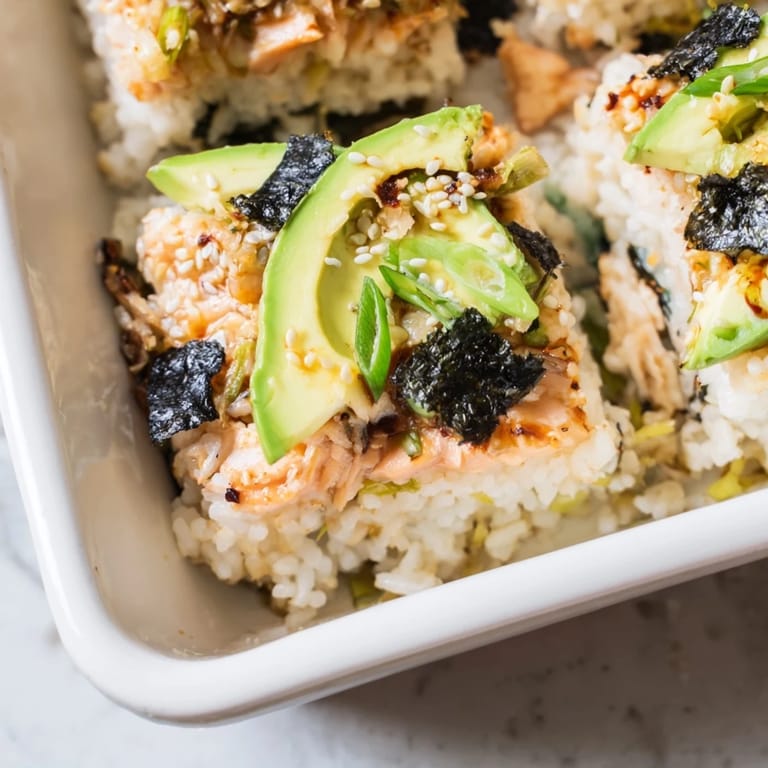
- Layer on the sliced avocado, crispy nori squares, toasted sesame seeds, and bright green onions while the casserole is still warm. Serve it in wedges with soy sauce on the side so people can adjust the salt to their taste.
 Save to Pinterest
 I remember serving this to my cousin who swears she doesn't like seafood, and she ended up having three slices before admitting the cream cheese had somehow made her trust the salmon. That's when I understood this dish isn't really about being authentically Japanese—it's about creating a moment where everyone at the table feels like they're eating something familiar but better.
The Magic of Layering
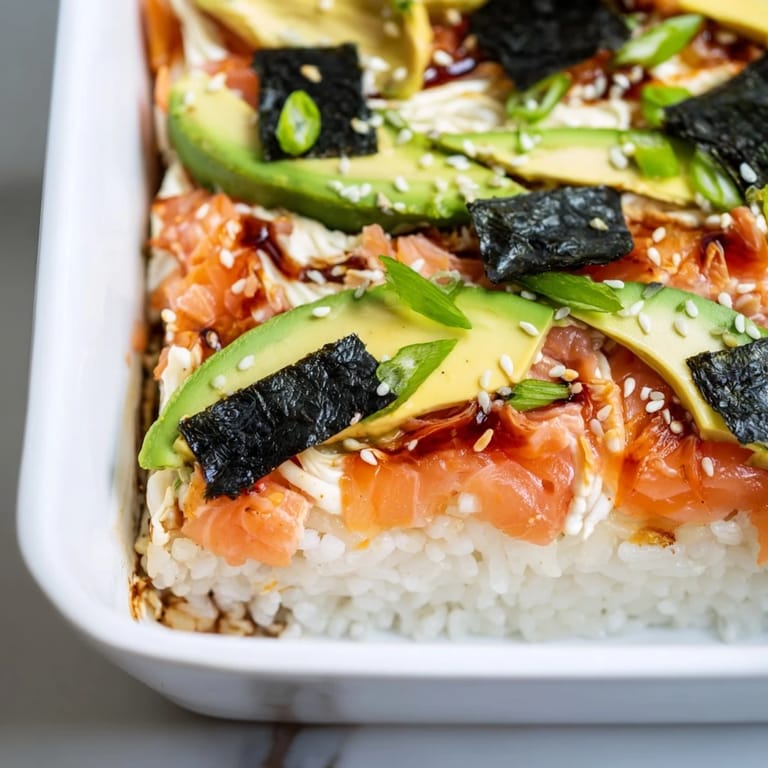
Every layer in this casserole has a purpose, and understanding why they work together changes how you cook it. The rice creates a sturdy, slightly sweet base that anchors everything else. The salmon layer, enriched with cream and mayo, becomes creamy but stays light because it's not heavy or oily. The avocado and nori on top add crunch and freshness that cuts through the richness and reminds you this came from an ocean, not a convenience food factory. When you serve it warm in generous wedges, all these textures and flavors exist in one bite, which is exactly why it feels like sushi but tastes like comfort.
Why This Works as a Casserole
Sushi is delicious but demanding—rolling takes practice, and it's fiddly and time-sensitive. This casserole strips away the technique and keeps only the flavors and textures that make sushi worth eating in the first place. You can prep it in your own time, bake it while you set the table, and serve it family-style so everyone feels included in the meal instead of waiting for individually plated rolls. It's also naturally forgiving, which means you can make it on a Tuesday after work without fearing catastrophe.
Variations and Customizations
The beauty of this dish is that you can swap proteins without changing the technique—crab meat, cooked shrimp, or even quality canned tuna work beautifully and won't throw off your baking time. You can adjust heat with more or less sriracha, skip it entirely if spice isn't your thing, or add a tiny splash of wasabi to the cream cheese for a subtle kick that surprises people. The avocado is non-negotiable for me, but if you're serving people with allergies or preferences, you can add extra nori, cucumber ribbons, or even thinly sliced radish for crunch.
- Swap salmon for cooked shrimp, crab meat, or canned tuna without changing cooking times.
- Add a touch of wasabi or sriracha to the cream cheese layer if you want heat that sneaks up on you.
- Layer thin cucumber slices or radish under the avocado for extra crunch and freshness.
 Save to Pinterest
 This casserole taught me that the best recipes are the ones that steal ideas from places you love and make them work for your actual life. It tastes like a sushi restaurant, feels like a home-cooked meal, and comes together in the time it takes to watch one episode of something good.
Recipe FAQs
- → Can I substitute the salmon with other seafood?
Yes, cooked crab meat, canned tuna, or cooked shrimp can be used in place of salmon to suit your preference.
- → How do I ensure the rice is properly seasoned?
Mix rice vinegar, sugar, and salt into the hot cooked rice, then fluff gently to evenly distribute the seasoning.
- → What is the best way to bake the salmon for this dish?
Brush the salmon with soy sauce and sesame oil, season with black pepper, then bake on a parchment-lined tray at 400°F (200°C) for 12–15 minutes.
- → Can I add heat to the creamy layer?
Yes, adding sriracha to the cream cheese and mayonnaise mixture provides a gentle spicy kick if desired.
- → What toppings enhance the dish's texture and flavor?
Sliced avocado, roasted nori squares, toasted sesame seeds, and thinly sliced spring onions provide freshness and crunch.
- → How should the dish be served?
Serve warm with soy dipping sauce on the side, along with optional pickled ginger and wasabi to complement flavors.