 Save to Pinterest
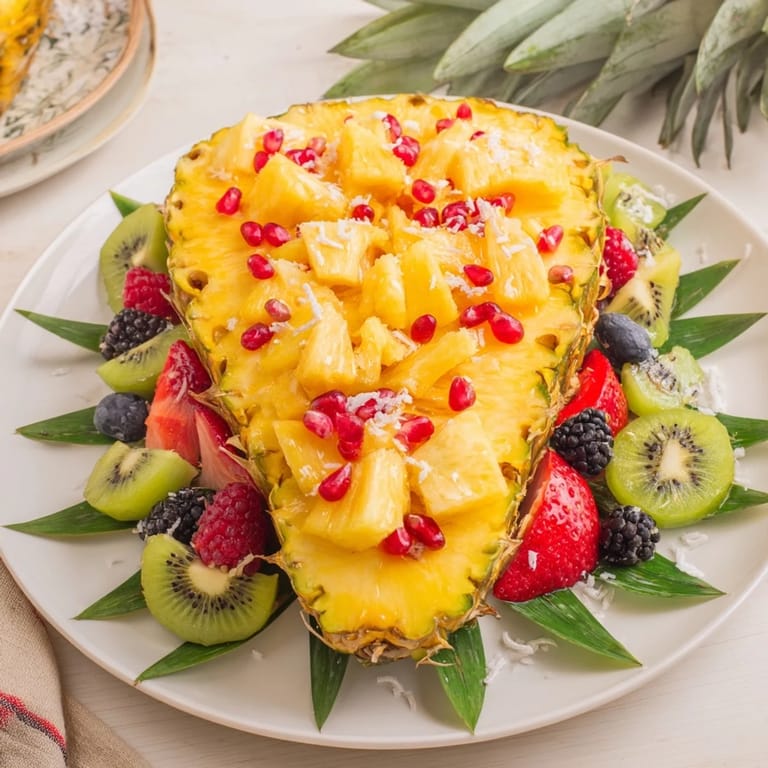
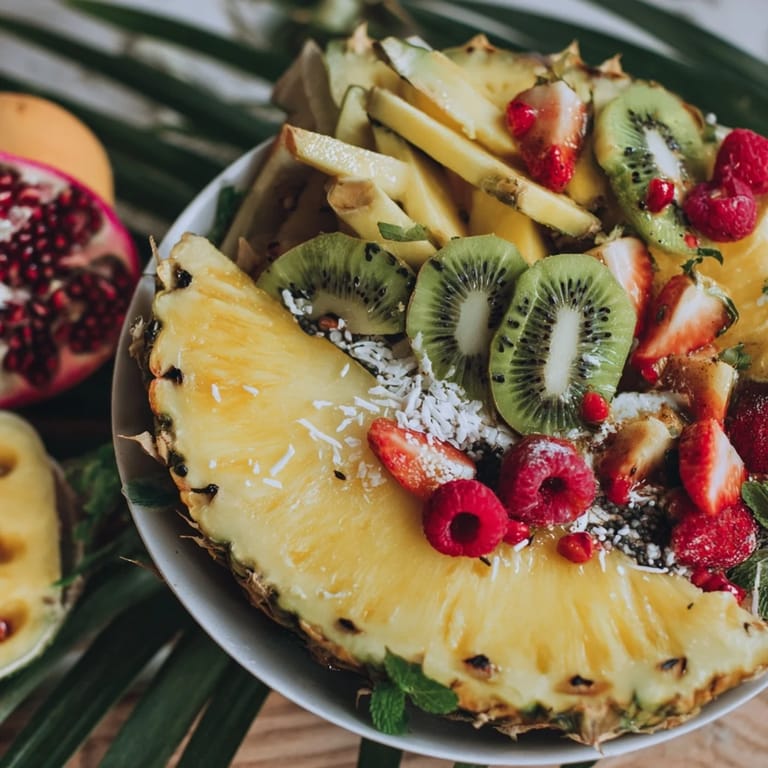
 I'll never forget the first time I created this pineapple paradise platter for my sister's garden party on a sweltering summer afternoon. She had just moved into her new house, and I wanted to bring something that felt both impressive and effortless. As I arranged those vibrant tropical fruits around the carved pineapple centerpiece, watching the colors come together like a sunset reflected in water, I realized this wasn't just a dessert—it was an edible work of art that made everyone at the table pause before eating.
I remember my friend Sarah arriving early to help set up, and when she saw that pineapple half sitting in the middle of the platter surrounded by all those jewel-toned fruits, she literally gasped. That moment—when something you've created stops someone in their tracks—that's when I knew this recipe was special. By the end of the evening, not a single piece of fruit remained, and three different people asked me how I'd arranged it so beautifully.
Ingredients
- 1 large ripe pineapple, halved vertically: This is your canvas. Choose one that smells sweet at the base and has deep golden color. The leaves stay intact for that stunning presentation, and scoring the flesh in a crosshatch pattern makes it easy for guests to grab pieces without a fork.
- 2 kiwis, peeled and sliced: Their bright green color provides a stunning visual contrast. Slice them just before serving to prevent browning, and they'll look jewel-like on the platter.
- 1 mango, peeled and sliced: The golden-orange hues are non-negotiable for visual drama. A ripe mango should yield slightly to pressure and smell fragrant. This is where most of the tropical flavor comes from.
- 1 papaya, peeled, seeded, and sliced: This brings both color and a delicate sweetness. Remove those small black seeds completely—they're beautiful but bitter.
- 1 small dragon fruit, peeled and sliced: The magenta skin and white speckled flesh create an almost otherworldly beauty. It's milder in flavor but essential for visual impact.
- 1 cup strawberries, hulled and halved: Fresh, bright red berries are your color anchors. Hull them carefully so they look neat, and halve them so they sit flat on the platter.
- 1 cup seedless grapes, halved: Choose either red or green—I like mixing both for extra color variation. Halving them makes them easier to eat and helps them nestle into gaps.
- 1/2 cup blueberries: These tiny jewels add pockets of deep color and won't roll away if you nestle them carefully into crevices.
- 1/2 cup raspberries: Delicate and precious, add these last so they don't get crushed. They add a whisper of tartness that balances the sweeter fruits.
- 1/2 cup pomegranate arils: Those ruby-red seeds are the secret weapon for both taste and visual drama. They catch the light and make the whole platter shimmer.
- 1/4 cup unsweetened shredded coconut: Adds tropical texture and a subtle nutty note. Toast it lightly in a dry pan first if you want more flavor, though untoasted works beautifully too.
- Fresh mint leaves: Not just garnish—the aroma adds another sensory dimension that makes people stop and breathe it in.
Tired of Takeout? 🥡
Get 10 meals you can make faster than delivery arrives. Seriously.
One email. No spam. Unsubscribe anytime.
Instructions
- Create Your Canvas:
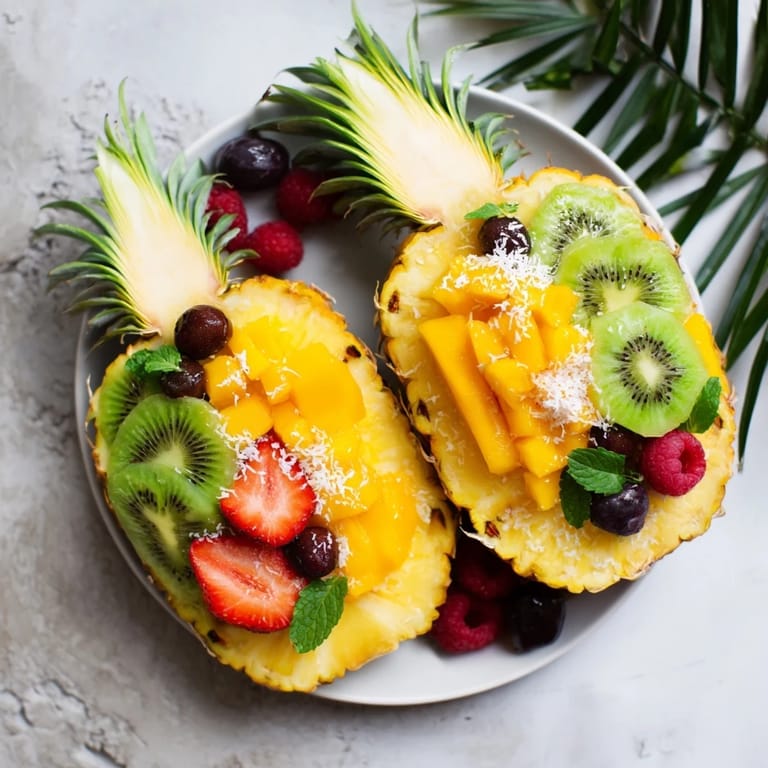
- Place that beautiful pineapple half in the absolute center of your serving platter, cut-side up. Take a sharp paring knife and score the flesh in a crosshatch pattern—not too deep, just enough to create little diamonds. This is where I learned to use a light hand: you want to guide where people will pull the fruit, not carve it away. The skin and those glorious green leaves stay completely intact.
- Build the First Layer:
- Now comes the artistic part. Fan out your mango, papaya, and dragon fruit slices in radiating lines from the pineapple, almost like spokes on a wheel. Alternate the colors deliberately—the soft orange-pink of mango next to the shocking magenta of dragon fruit next to the peachy papaya. This is where you're creating visual rhythm.
- Fill the Garden:
- Work in concentric rings around your fanned fruits, placing kiwi slices, strawberries, grapes, blueberries, raspberries, and those precious pomegranate arils. Don't overthink placement—look for the gaps and nestle fruits to create a sense of abundance. Your hands will know what looks balanced.
- Add the Finishing Touches:
- Sprinkle that toasted coconut evenly across the arrangement, letting some pile softly in the crevices of the pineapple's scored flesh. Tuck fresh mint leaves into different corners, tucking a few right into that pineapple center. Step back. Admire. Breathe.
- The Final Service:
- If you're serving immediately, bring it to the table and let people marvel before they eat. If you need to prepare it ahead, cover it loosely with plastic wrap and refrigerate for up to 2 hours—the fruits stay crisp and the presentation holds.
 Save to Pinterest
 What touched me most was watching the kids at that garden party approach the platter with wonder, pointing out their favorite colors and carefully plucking individual fruits. For them, it wasn't just food—it was an edible rainbow they could hold in their hands. That's when food becomes memory.
Choosing Your Tropical Fruits
The real magic of this platter lives in selecting fruits at their absolute peak. Visit your farmers market or a good produce section where you can touch and smell. A ripe mango will give slightly when you press it gently and smell sweet without being fermented. The pineapple should be heavy for its size, which means it's full of juice. The papaya, when ripe, will feel like a firm peach—not rock hard, but with some give. Dragon fruit should be bright and unblemished. If you find these fruits underripe, you can buy them a day or two early and let them sit on your counter, but never refrigerate a pineapple before it's ripe.
Presentation Secrets That Changed Everything
After making this platter dozens of times for different occasions, I've learned that the arrangement is less about perfection and more about intention. Create radiating patterns from the center, use the natural color families to create visual pathways, and always leave a little breathing room between fruits rather than packing them too tightly. The gaps make the platter feel generous, not sparse. One unexpected trick: if your platter is going to sit for a while, leave the mint off until the last moment—it wilts faster than everything else, but when you add it fresh right before serving, it looks like you just put this together five minutes ago.
Flavor Pairings and Serving Companions
While this platter is stunning on its own, a few companion ideas have made it even more special at different gatherings. A drizzle of raw honey or fresh lime juice just before serving adds complexity without overpowering the natural sweetness. If your crowd likes creamy elements, set out a small bowl of coconut cream or Greek yogurt for dipping—watching people discover they can dip their fruit into coconut cream is its own kind of joy. For beverages, I've had perfect success pairing this with sparkling water with fresh lime and mint, a chilled Moscato if you're drinking wine, or cold herbal tea. The point is something cold and refreshing that won't compete with the fruit itself.
- If any fruit starts looking tired, it means the kitchen is too warm—give the whole platter a 10-minute chill in the refrigerator and it'll perk right back up
- You can absolutely swap in whatever tropical fruits look best that day: starfruit, passion fruit, lychee, or fresh fig all work beautifully
- Make this platter no more than 2-3 hours before serving for peak freshness and crispness
 Save to Pinterest
 Every time I make this, I'm reminded that sometimes the most memorable moments aren't from complicated recipes—they're from taking simple, perfect ingredients and arranging them with care. This pineapple paradise has become my go-to when I want to give people something beautiful that tastes like summer itself.
Recipe FAQs
- → How do I prepare the pineapple centerpiece?
Slice the pineapple in half vertically, trim the core, and score the flesh in a crosshatch pattern while keeping the skin intact for easy serving and presentation.
- → What fruits pair well around the pineapple?
Kiwi, mango, papaya, dragon fruit, strawberries, grapes, blueberries, raspberries, and pomegranate arils create a vibrant and balanced tropical selection.
- → How can I keep the fruit platter fresh before serving?
Cover and refrigerate the assembled platter for up to 2 hours to maintain freshness and texture without compromising flavor.
- → Are there garnish suggestions to enhance flavor and presentation?
Sprinkle unsweetened shredded coconut and fresh mint leaves over the fruits to add texture, aroma, and a tropical vibe.
- → Can this fruit arrangement cater to dietary restrictions?
The platter is naturally vegan, gluten-free, and free from common allergens except coconut if used as garnish. Check ingredients for cross-contamination risks.
- → What beverages complement this tropical fruit presentation?
Pair with chilled Moscato or sparkling water with lime for a refreshing, light accompaniment that complements the fresh fruit flavors.