 Save to Pinterest
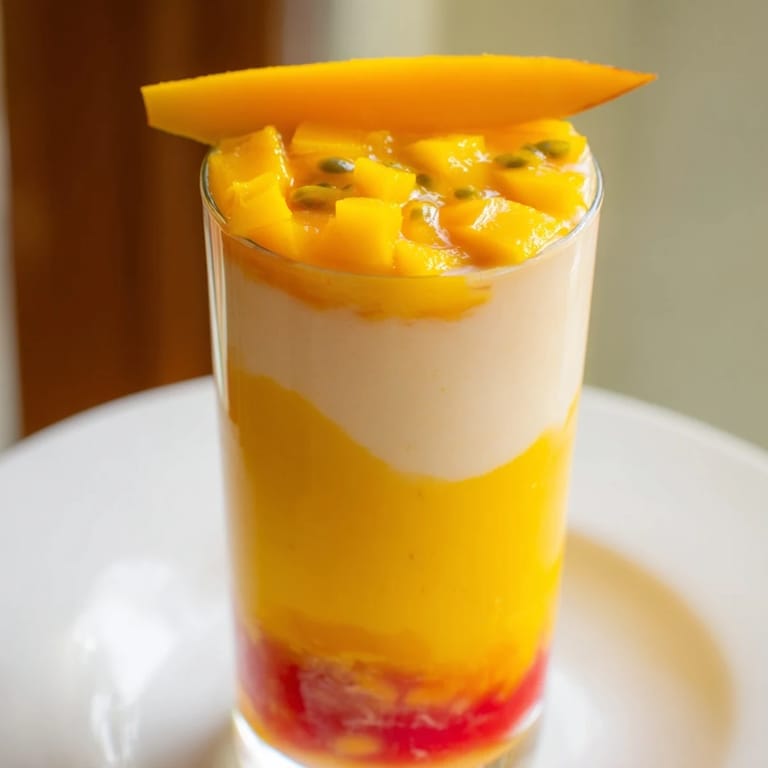
 I discovered the magic of layered smoothies on a sweltering afternoon when my blender seemed to mock me with three half-empty containers of different colored fruit. Rather than dump everything together like I usually do, I decided to pour them carefully, one atop the other, and watched as the mango sank beneath the passion fruit, which floated above the orange juice in this accidental ombré masterpiece. That moment taught me that sometimes the most beautiful things come from refusing to rush, from letting each flavor have its own space before they eventually blend into something greater than any single ingredient could be.
I made this for my partner one morning when they were stressed about something at work, and watching their face light up as they tilted the glass to see the layers shift was small magic. They texted me a photo from their office later that day with the caption "still thinking about breakfast," and I realized this wasn't just a smoothie anymore—it was proof that the little things we do in the kitchen matter.
Ingredients
- Ripe mango, peeled and diced (1 cup fresh or frozen): This is your foundation, and its sweetness should be the star—pick fruit that gives slightly to pressure and smells faintly floral, or use frozen if you want thicker layers and deeper color.
- Passion fruit pulp (½ cup, from about 3–4 passion fruits): The seeds add texture and tartness that balances the mango's sweetness, creating that essential middle note that keeps the smoothie from becoming cloying.
- Freshly squeezed orange juice (¾ cup): Fresh really does matter here because the brightness cuts through the richness of the yogurt layers and adds a gentle bitterness that rounds out the whole drink.
- Plain Greek yogurt (1 cup total, divided): This creamy element is what makes the layering possible—its density creates those beautiful horizontal lines, and the tang keeps everything tasting fresh.
- Honey (3 tablespoons total, optional but recommended): A small drizzle in each layer enhances the fruit's natural sweetness without overwhelming it, though you can absolutely skip this if you're watching sugar intake.
- Water (2–3 tablespoons as needed): This is your secret tool for getting each layer to the perfect consistency—thick enough to sit prettily but still pourable.
Tired of Takeout? 🥡
Get 10 meals you can make faster than delivery arrives. Seriously.
One email. No spam. Unsubscribe anytime.
Instructions
- Gather your vessels and tools:
- Set out three clean blending containers or keep your blender within reach for rinsing between batches. Have your two clear glasses standing ready—the better the glass, the better the view of your work.
- Build the golden base:
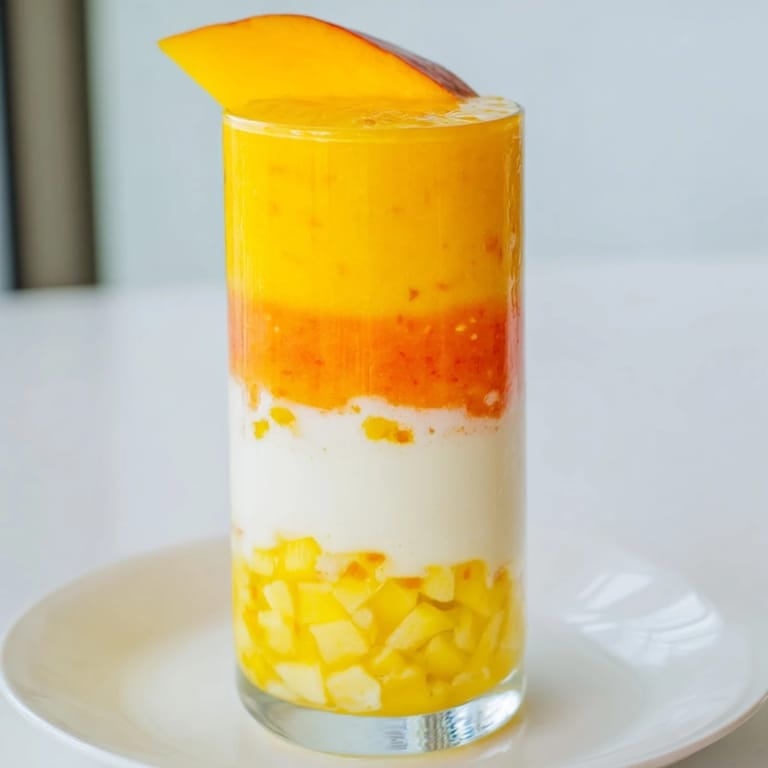
- Blend the mango, yogurt, honey, and water until the mixture moves like thick silk, then pour it evenly into the bottom of each glass. This layer should feel substantial and anchor the whole composition.
- Layer the passion fruit middle:
- Blend the passion fruit pulp with yogurt and honey until creamy, then carefully pour or spoon it over the mango layer. If you pour slowly and let it meet the spoon held just above the surface, the line between layers stays clean and defined.
- Crown with citrus brightness:
- Blend the orange juice with yogurt and honey until smooth, then gently pour this on top, using the same spoon technique if needed. The orange layer should catch the light like liquid gold.
- Perfect the ombré effect (optional artistry):
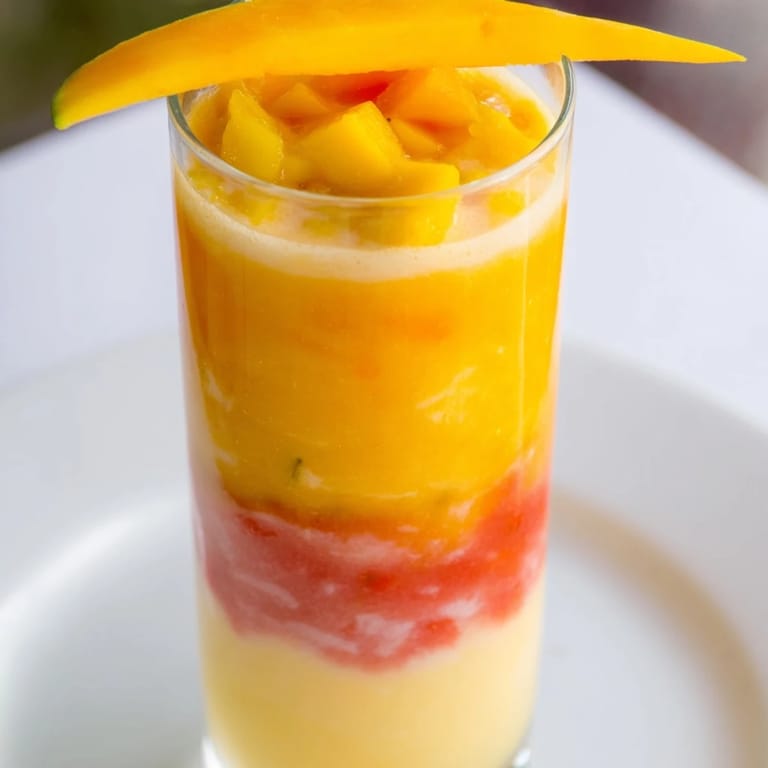
- If you're feeling meticulous, tilt your glass at a slight angle and pour each layer over the back of a spoon held just above the previous layer—this slows the pour and prevents unnecessary mixing. It takes maybe thirty seconds more but transforms the whole presentation.
- Finish and serve:
- Top with a slice of fresh fruit or a mint sprig if you have it, then drink while the layers are still distinct and the whole thing is properly chilled.
 Save to Pinterest
 There's a particular satisfaction in bringing something beautiful to the table that's also genuinely good for you—no apologies, no asterisks. This smoothie became my answer to morning chaos, a small ritual that slowed things down just enough to remember what I was feeding myself and why.
The Science of Beautiful Layers
The reason layers stay separated has everything to do with density and temperature. Yogurt is heavier than juice, so it sinks; mango is heavier still, so it settles at the bottom. But once these temperatures equalize and the fruit starts to defrost or warm, the boundaries start to blur, which is exactly why this drink demands to be consumed fresh and cold. I learned this the hard way by making one the night before, thinking it would be a time-saver—by morning, it had become a thoroughly blended smoothie missing all its visual appeal. The lesson stuck with me: some things lose their magic if you try to prepare them too far ahead.
Playing with Substitutions
I've experimented with coconut yogurt when dairy wasn't available, and it works beautifully—actually, some prefer it because it adds its own tropical note that feels right at home with mango and passion fruit. The layering still works, and the taste shifts just enough to feel intentional rather than like a compromise. Other times I've added a tablespoon of chia seeds to the mango layer for texture, or a tiny pinch of turmeric to one layer just for the color surprise (it sounds strange but tastes good alongside the citrus). The point is that once you understand why the layers work, you can play within those constraints without losing what makes this drink special.
Making It Your Own
The real joy of this recipe is that it's a framework rather than a law. If you love strawberry more than passion fruit, or if pineapple speaks to you in the morning, the same layering logic applies—just remember that density matters, temperature matters, and moving slowly matters. One friend of mine adds a tiny splash of coconut milk to the mango layer and swears it changed everything; another insists on fresh ginger in the orange layer for a subtle warmth. Neither of them followed my recipe exactly, but both of them understood the principle underneath.
- Frozen fruit will give you thicker, more dramatically defined layers than fresh.
- Keep everything cold and work with intention—rushing defeats the visual purpose entirely.
- Serve immediately for maximum layer definition, or embrace the eventual blended smoothie as it transitions into something else.
 Save to Pinterest
 This smoothie sits somewhere between breakfast and ritual, between nourishment and art—which might explain why it's become one of those recipes I reach for not because I have to, but because making it reminds me why I love cooking in the first place. There's no better way to start the day than with something that tastes as good as it looks.
Recipe FAQs
- → How do I create distinct layers in this smoothie?
Blend each layer separately and pour slowly over the previous one, tilting the glass slightly and using a spoon's back to prevent mixing.
- → Can I substitute dairy yogurt for a plant-based version?
Yes, coconut yogurt or other plant-based yogurts work well for a dairy-free alternative without compromising creaminess.
- → What does freezing the fruit do for the layers?
Frozen fruit helps thicken each layer, making the separation and ombré effect more defined.
- → Is honey necessary for sweetness?
Honey is optional; you can adjust or omit it based on your taste or dietary preferences.
- → What tools are needed to prepare this drink?
A blender, measuring cups and spoons, clear glasses, and a spoon for layering are required.
- → Can this drink be made ahead of time?
For best layered effect, it’s recommended to prepare and serve immediately, as layers may blend if stored.