 Save to Pinterest
 There's something about October that makes me crave butternut squash soup—not because of some grand tradition, but because I once burned an entire batch while distracted by a phone call, and the charred bits that stuck to the pan actually smelled incredible. That mistake led me to deliberately roast the vegetables longer, letting them caramelize until they turned a deep amber color, and suddenly the soup tasted like autumn itself. Now I make it whenever I need something that feels both fancy and utterly simple, something I can put together on a weeknight and still feel proud serving to friends.
I made this for my neighbor last winter when she was recovering from surgery, and I'll never forget how she texted me three hours later saying she'd had three bowls and felt like herself again. There's power in a good soup—it's warm, it's nourishing, and it says I'm thinking of you without being overwhelming. Since then, I've made it for countless people, and everyone asks for the recipe, which means I get to explain the roasting trick that changes everything.
Ingredients
- Butternut squash: One large one, peeled and cubed—the roasting caramelizes the edges and brings out natural sweetness you won't believe.
- Yellow onion: One medium, chopped—this softens and almost melts into the soup, adding depth without overpowering.
- Garlic cloves: Two peeled—roasting mellows garlic's bite and makes it sweet and nutty instead.
- Carrot: One medium, peeled and chopped—adds a subtle earthiness and completes the holy trinity of roasted vegetables.
- Vegetable broth: Four cups—this becomes your soup's backbone, so use something you'd actually drink on its own.
- Olive oil: Two tablespoons—just enough to coat everything and help those vegetables get gorgeously caramelized.
- Salt: One teaspoon—taste as you go because broth saltiness varies wildly between brands.
- Black pepper: Half a teaspoon—freshly ground makes all the difference, trust me.
- Ground nutmeg: Half a teaspoon—this is the secret that makes people ask what's in it, so don't skip it.
- Cayenne pepper: A quarter teaspoon optional—adds a whisper of heat that makes the butternut squash taste even squashier.
- Heavy cream or coconut cream: A quarter cup optional—stir this in at the end for richness that coats your mouth beautifully.
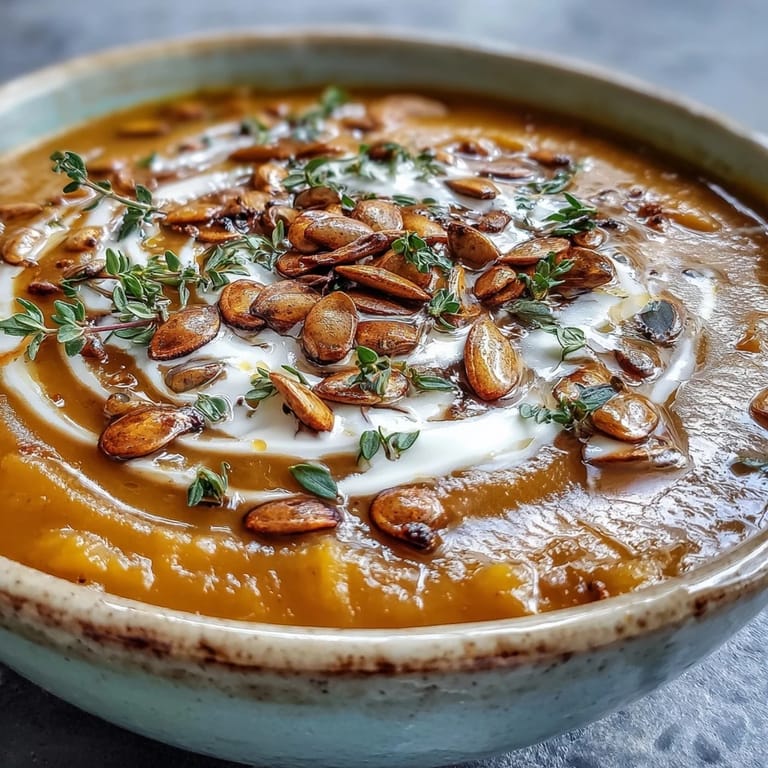
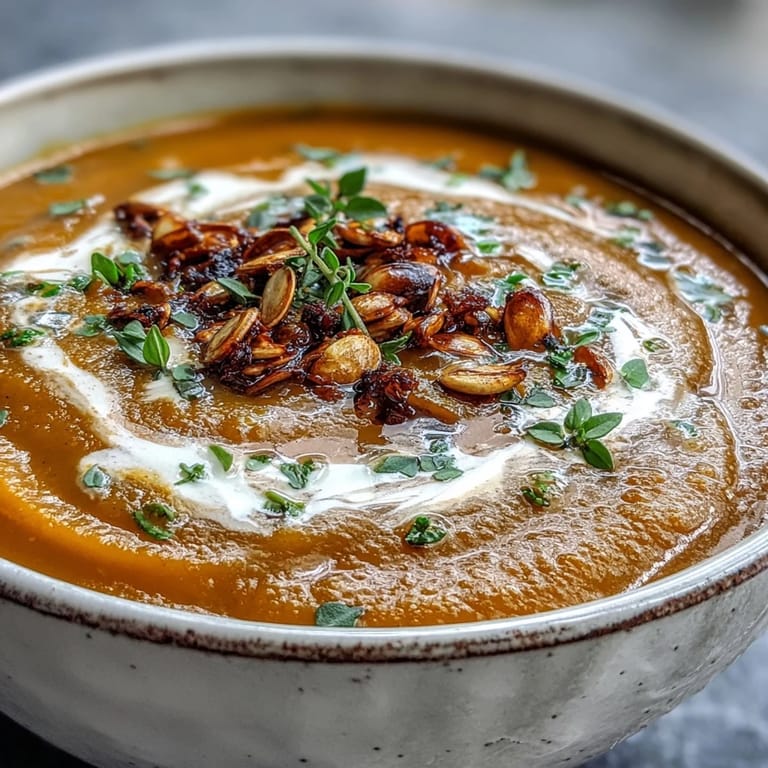
- Toasted pumpkin seeds: For garnish—they add crunch and visual drama, plus they're deeply satisfying to chew.
- Fresh thyme: For garnish—a tiny sprig on top makes it look intentional and tastes herbaceous and bright.
Tired of Takeout? 🥡
Get 10 meals you can make faster than delivery arrives. Seriously.
One email. No spam. Unsubscribe anytime.
Instructions
- Heat your oven and prep your vegetables:
- Set the oven to 400°F and get your baking sheet ready. Cube the butternut squash, chop the onion and carrot, and leave the garlic cloves whole—they'll get soft and spreadable when roasted.
- Toss everything together:
- Arrange your vegetables on the baking sheet, drizzle with olive oil, and toss until every piece glistens. This coat of oil is what creates those caramelized edges you're after.
- Roast until caramelized:
- Slide the sheet into the oven for thirty to thirty-five minutes, stirring halfway through so nothing burns on the bottom. You'll know it's ready when the squash is completely tender and the edges have turned a deep golden-brown.
- Transfer to your pot:
- Pour the roasted vegetables and all their caramelized bits into a large pot—don't leave anything behind on that sheet. Add your vegetable broth, salt, pepper, nutmeg, and cayenne if you're feeling brave.
- Simmer to meld flavors:
- Bring everything to a gentle simmer over medium heat and let it bubble quietly for about ten minutes. This isn't rushing; you're letting those spices get to know each other.
- Blend until silky:
- Using an immersion blender, work through the pot until there isn't a single lump left and the soup looks like liquid velvet. If you're using a countertop blender, work in batches and be careful when blending hot liquid—never fill it more than halfway.
- Taste and adjust:
- Add cream if you want richness, taste for salt, and adjust the spices until it tastes like your version of perfect. This is your moment to make it yours.
- Serve with confidence:
- Ladle into bowls and top with toasted pumpkin seeds and a tiny sprig of thyme, or keep it simple and let the soup speak for itself.
 Save to Pinterest
 One afternoon I was making this soup and my daughter wandered into the kitchen, drawn by the smell of roasted vegetables. She was worried about a presentation at school and couldn't eat much, but she sat at the counter with a mug of this, and by the time she finished, she seemed lighter somehow. I realized then that this soup isn't really about butternut squash at all—it's about creating something warm that makes people feel noticed.
The Roasting Secret
The difference between good butternut squash soup and exceptional butternut squash soup lives entirely in the roasting step. Most people steam or boil their squash, which gets the job done, but roasting caramelizes the natural sugars and creates depth that's impossible to achieve any other way. When you taste those slightly charred, golden-brown edges blended into the finished soup, you'll understand why this step isn't optional—it's the whole reason to make it this way.
Customizing Your Bowl
This soup is endlessly flexible, which is part of why I love making it. Some nights I add a diced apple to the roasting tray for subtle sweetness, other times I stir in a splash of sage-infused olive oil at the end. A friend who keeps coconut milk on hand always uses that instead of heavy cream, and honestly, it's just as luxurious—the soup doesn't know the difference, and neither will your guests.
Pairing and Serving Ideas
This soup pairs beautifully with crusty bread for dipping, or serve it alongside a grilled cheese sandwich for a lunch that feels both cozy and satisfying. I've also ladled it into bread bowls at dinner parties, which always impresses people more than it should. Here's what makes it special on the table:
- A bowl of this with warm bread becomes a complete meal that feels intentional without requiring a lot of fuss.
- Top it with toasted pumpkin seeds for crunch, crispy sage leaves for herbaceousness, or a drizzle of truffle oil if you're feeling fancy.
- It reheats beautifully in the microwave and tastes just as good three days later, so make a double batch if you're cooking for one.
 Save to Pinterest
 This soup has become my go-to when I want to feel like I'm taking care of people, including myself. It's proof that simple ingredients and a little patience create something that tastes like you spent all day cooking.
Recipe FAQs
- → Can I freeze this soup?
Yes, this soup freezes exceptionally well for up to 3 months. Cool completely before transferring to airtight containers. Thaw overnight in the refrigerator and reheat gently, adding a splash of broth if needed to restore consistency.
- → What can I use instead of an immersion blender?
A countertop blender works perfectly. Blend in batches, filling only halfway and venting the lid to allow steam escape. Alternatively, use a potato masher for rustic texture or press through a fine-mesh sieve for ultra-smooth results.
- → How do I choose the best butternut squash?
Look for squash with matte, tan skin free of cuts or soft spots. Heavier specimens indicate more flesh. A firm stem attachment suggests freshness. Store whole squash in a cool, dark place for up to 2 months before preparing.
- → Can I make this dairy-free?
Absolutely. Simply substitute coconut cream for heavy cream, or omit entirely for a lighter version. The roasted vegetables provide plenty of natural creaminess when blended. Coconut cream adds subtle tropical sweetness that complements the squash beautifully.
- → What herbs work well with this soup?
Fresh thyme, sage, and rosemary all complement the squash's natural sweetness. Add fresh herbs during the final simmer or use as garnish. Dried herbs work during roasting but use sparingly as they intensify with heat. A bay leaf during simmering adds depth.
- → How can I make this soup more filling?
Stir in cooked wild rice, quinoa, or small pasta shapes during the final simmer. Add shredded chicken or white beans for protein. A slice of crusty bread on the side or homemade croutons on top transform this into a complete meal.