 Save to Pinterest
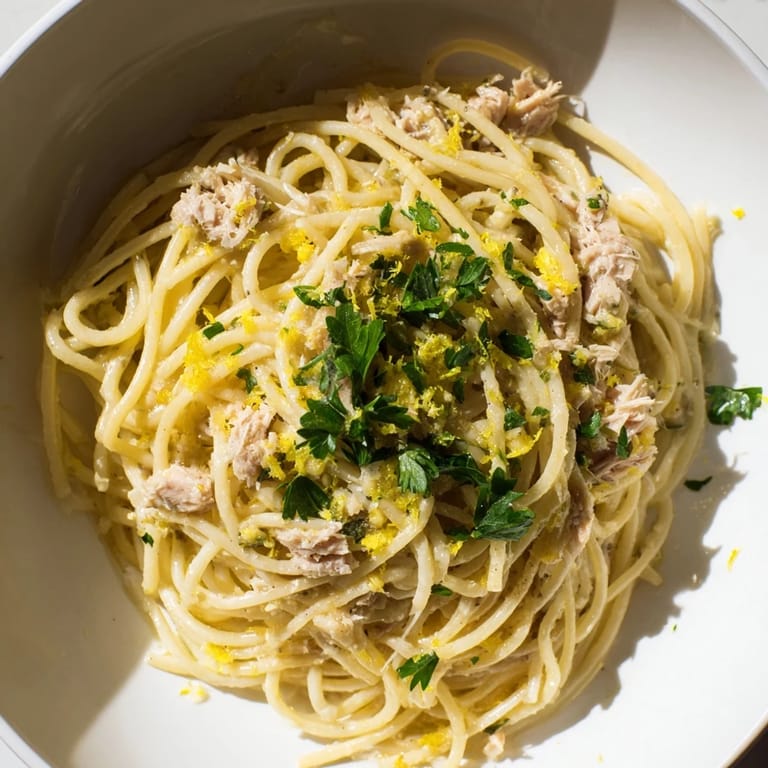
 I used to think pantry pasta meant boring pasta, until a friend showed me how a can of good tuna could turn into something bright and alive. We were both exhausted after a long day, and she pulled out spaghetti, a lemon, and two tins of tuna like it was the most natural thing in the world. Twenty minutes later, we were twirling forkfuls of lemony, garlicky strands that tasted like the Mediterranean had wandered into her tiny kitchen. I've been making it ever since, especially on nights when I need something quick but don't want to compromise on flavor.
The first time I made this for my neighbors, I wasn't sure if canned tuna would feel fancy enough for company. But the moment I tossed the hot spaghetti with the garlic oil and squeezed that lemon over everything, the kitchen smelled so good they stopped mid-conversation. One of them said it reminded her of summers in Sicily, and I realized this dish doesn't need to apologize for being simple.
Ingredients
- Dried spaghetti: The long strands are perfect for catching all that garlicky, lemony goodness, and they cook up tender in about twelve minutes.
- Olive oil: This is your flavor base, so use something you'd happily dip bread into.
- Garlic cloves: Slice them thin so they turn golden and sweet instead of bitter, and your kitchen will smell like an Italian grandmother moved in.
- Lemon: Both the zest and juice bring a brightness that makes the whole dish sing, so don't skip either.
- Tuna in olive oil: The oil from the can adds richness, and good quality tuna flakes beautifully without turning mushy.
- Crushed red pepper flakes: Just a pinch gives a gentle warmth that balances the lemon without overwhelming anything.
- Fresh flat-leaf parsley: Stirred in at the end, it adds a pop of color and a fresh, grassy note.
- Pasta cooking water: This starchy liquid is the secret to a silky sauce that clings to every strand.
- Salt and black pepper: Taste as you go, because good seasoning is what turns a decent dish into one you crave.
Tired of Takeout? 🥡
Get 10 meals you can make faster than delivery arrives. Seriously.
One email. No spam. Unsubscribe anytime.
Instructions
- Boil the pasta:
- Get a big pot of water boiling with a generous pinch of salt, then cook your spaghetti until it still has a little bite. Before you drain it, scoop out a coffee mug's worth of that cloudy cooking water and set it aside.
- Warm the garlic:
- Pour the olive oil into your skillet over medium heat and add the sliced garlic. Let it sizzle gently for a minute or two until it turns fragrant and just barely golden, not brown.
- Add the tuna and lemon:
- Flake in the drained tuna, breaking it up softly with your spoon, then stir in the lemon zest, juice, and a pinch of red pepper if you like a little heat. Let it all warm through for a couple of minutes, stirring now and then.
- Toss everything together:
- Drop the drained spaghetti right into the skillet and toss it with the tuna mixture. Add splashes of that reserved pasta water until the sauce lightly coats the noodles and everything looks glossy.
- Finish and serve:
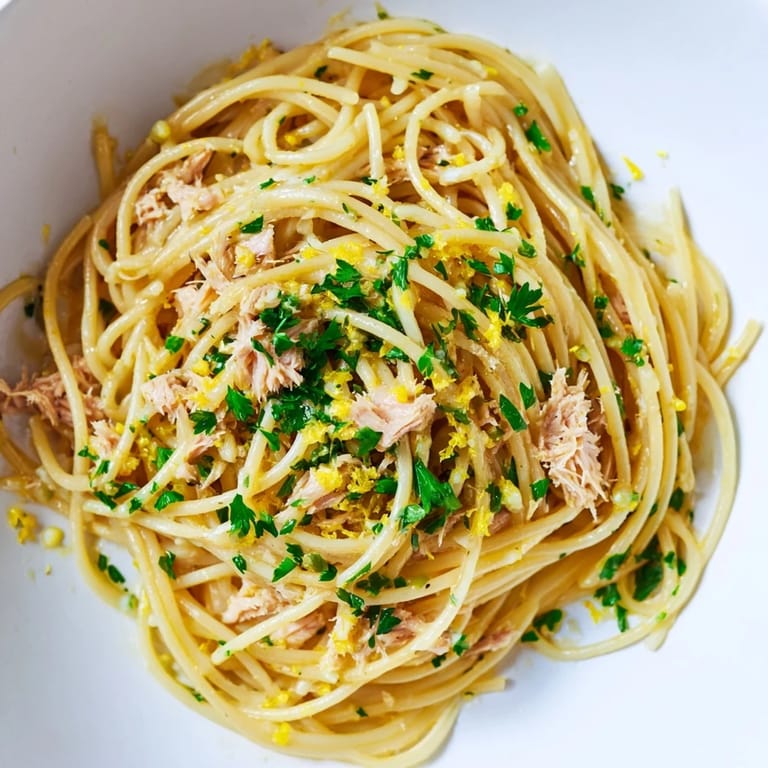
- Stir in the chopped parsley, taste for salt and pepper, then divide it among your plates. Sprinkle a little extra parsley on top and tuck a lemon wedge on the side for anyone who wants an extra squeeze.
 Save to Pinterest
 I remember sitting at the table with a bowl of this on a rainy Tuesday, realizing I didn't need reservations or fancy groceries to feel like I was treating myself. Sometimes the best meals are the ones that come together quietly, without any fuss, and still manage to make you pause between bites.
How to Pick Your Tuna
Not all canned tuna tastes the same, and the kind packed in olive oil makes a real difference here. Look for chunk or solid tuna that flakes into big, tender pieces instead of turning into mush. The oil it's packed in becomes part of your sauce, so if you find a brand you love, stick with it.
Making It Your Own
Once you've made this a few times, you'll start seeing where you can play around. I've tossed in halved cherry tomatoes for a burst of sweetness, stirred in briny capers for extra punch, or even added a handful of baby spinach at the end for color. It's forgiving like that, always ready to welcome whatever you have on hand.
Storing and Reheating
Leftovers keep in the fridge for a day or two, though the pasta will soak up some of the sauce as it sits. When you reheat it, add a splash of water or a drizzle of olive oil in the pan over low heat, tossing gently until it loosens up again. I've even eaten it cold straight from the container, and it still tastes bright and satisfying.
- Store in an airtight container and use within two days for best texture.
- Reheat gently on the stovetop with a little liquid to bring it back to life.
- Cold leftovers make a surprisingly good lunch if you're in a hurry.
 Save to Pinterest
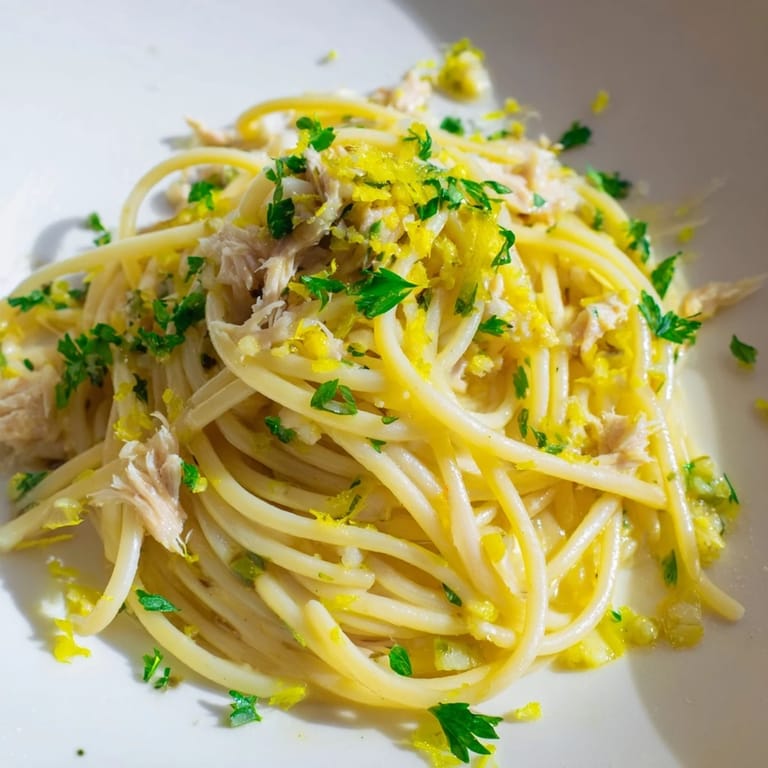
 This is the kind of recipe that proves you don't need a long ingredient list or hours in the kitchen to make something you'll want again and again. Keep the pantry stocked, and you'll always be twenty-five minutes away from something that feels like a little escape.
Recipe FAQs
- → What type of pasta works best?
Spaghetti is traditional and holds the sauce well, but linguine or fettuccine are good alternatives for similar texture.
- → Can I use fresh tuna instead of canned?
Fresh tuna can be used, but adjust cooking time carefully to avoid overcooking. Seared chunks add a different texture.
- → How do I prevent garlic from burning?
Cook sliced garlic over medium heat just until fragrant and lightly golden; stirring frequently helps prevent burning.
- → What if I don't have fresh parsley?
Dried parsley can be used, but add it earlier in cooking to rehydrate; fresh leaves provide a brighter flavor.
- → Can I add other vegetables to this dish?
Yes, cherry tomatoes, capers, or spinach are excellent additions to enhance flavor and nutrition.