 Save to Pinterest
 The fresh scent of cucumber and a hint of toasted sesame always pull me right back to my tiny sunlit kitchen on the first warm day of spring. There was a certain energy—the anticipation of something bright and light that set the whole mood for the meal. Preparing this Spring Tuna Poke Bowl was a spontaneous idea after spotting some beautiful tuna at the market. That day, even the simple act of thinly slicing radishes felt like a purposeful celebration of the season. Honest confession: I couldn't help but sneak a slice of avocado before it ever made it into the bowl.
I once made this poke bowl for a close friend who was having a long week, and we set everything out on the counter so we could each build our own. The conversation shifted from deadlines to why ponzu is superior to regular soy sauce, and we laughed over uneven cucumber slices—somehow, the casual mess made it even more delicious.
Ingredients
- Sushi-grade tuna: Using the freshest tuna makes all the difference—if you have a fishmonger nearby, it's worth a visit for melt-in-your-mouth texture.
- Ponzu sauce: The citrus notes give the poke its signature brightness; look for a good-quality brand or try making your own.
- Sesame oil: Just a drizzle adds depth and aroma—don’t overdo it, or it can overpower the fish.
- Soy sauce: A staple for seasoning, but I learned to use a light hand to let the tuna shine.
- Rice vinegar: Lifts the marinade and subtly seasons the rice; always double-check the bottle for flavor intensity.
- Toasted sesame seeds: They bring crunch and nuttiness—always toast them fresh if you can.
- Cucumber: Go for crisp and seedless varieties, and slice them thinly for the perfect crunch.
- Radishes: The peppery bite and vivid color are a lively touch—use a sharp knife for paper-thin slices.
- Avocado: Creamy, rich, and always best sliced at the last minute to avoid browning.
- Carrot: Julienne by hand for more control or use a peeler if you want pretty ribbons.
- Edamame: Shelled and ready to go—these add protein and a lovely green pop.
- Spring onions: Thin slices add both mild onion flavor and a snappy crunch on top.
- Pickled ginger: Optional, but it’s a zesty bonus for palate-cleansing between bites.
- Sushi rice: Short-grain rice holds together well; spread it out to cool so it doesn’t turn gummy.
- Rice vinegar (for rice): Mix this in while the rice is still warm for the best flavor absorption.
- Salt: Just a pinch will do to enhance the seasoned rice.
- Nori: Thin strips make for a toasty garnish—scissors work better than tearing by hand.
- Extra sesame seeds: For one last hit of crunch and flavor just before serving.
- Microgreens: These are optional but turn any bowl into a restaurant-worthy plate if you’ve got some on hand.
Tired of Takeout? 🥡
Get 10 meals you can make faster than delivery arrives. Seriously.
One email. No spam. Unsubscribe anytime.
Instructions
- Mix the Tuna:
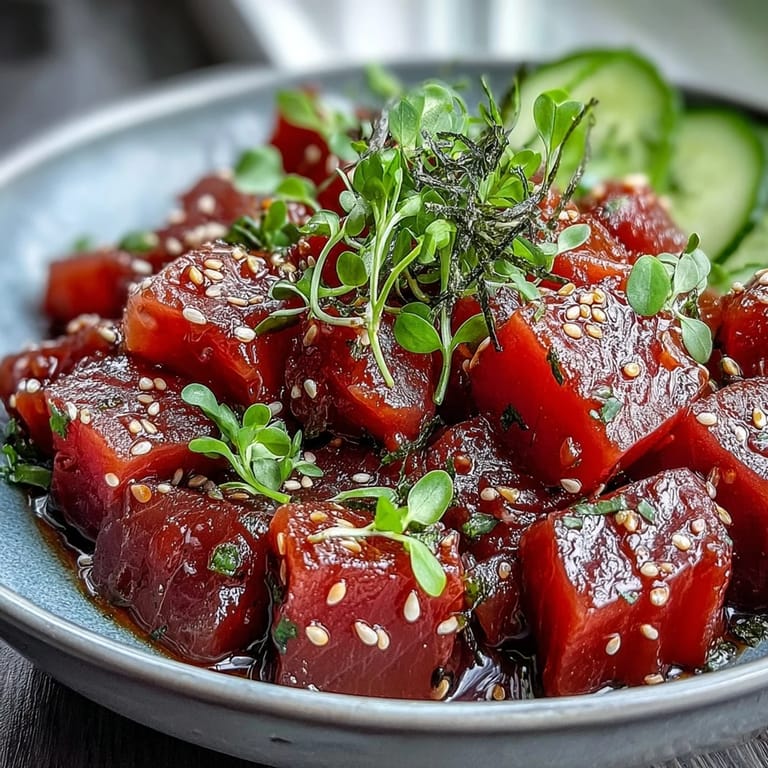
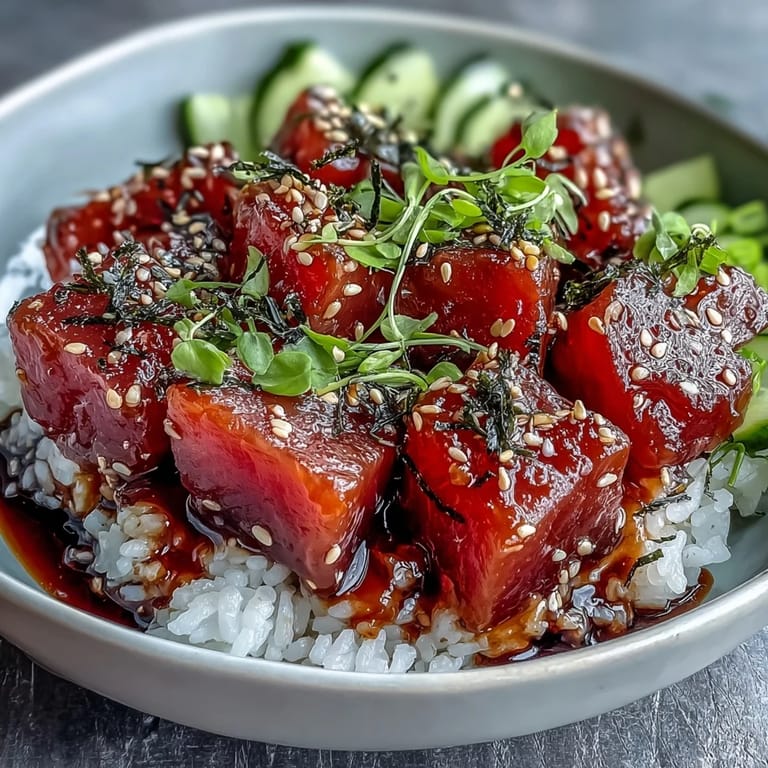
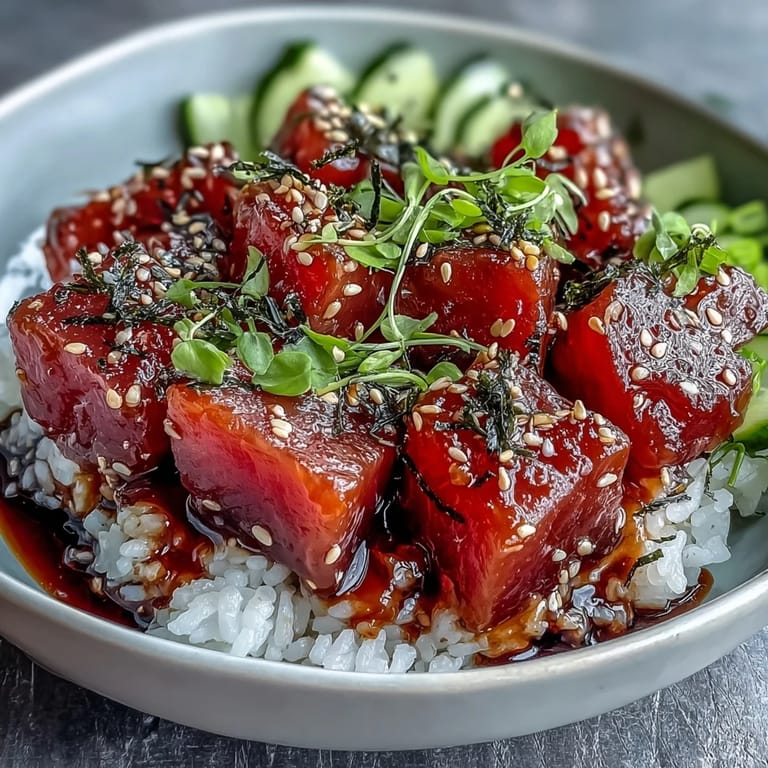
- Add the diced tuna to a bowl, pour in ponzu sauce, sesame oil, soy sauce, rice vinegar, and sesame seeds, and toss carefully, inhaling the sharp and nutty fragrances—let it chill for 10 minutes so the flavors meld.
- Season the Rice:
- In a separate bowl, sprinkle rice vinegar and a pinch of salt into your cooled sushi rice and gently mix with a paddle or fork for fluffy grains.
- Prep Vegetables & Toppings:
- Slice radishes and cucumber whisper-thin, julienne the carrot, slice avocado, shell edamame, and arrange all toppings within reach for easy assembly.
- Build Your Bowls:
- Divide the seasoned rice between two bowls, smoothing out with the back of a spoon if you want an Instagram-worthy surface.
- Layer the Good Stuff:
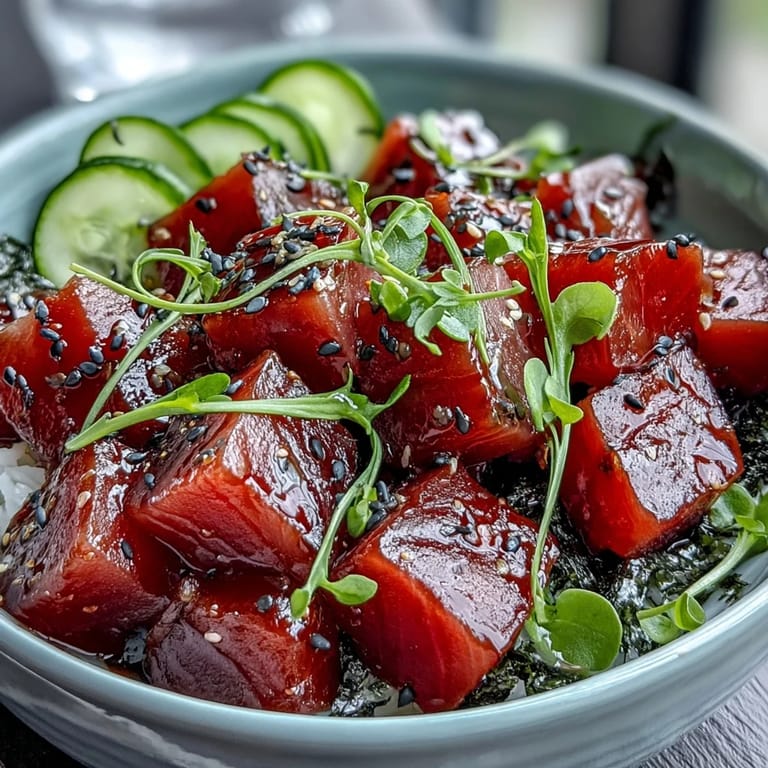
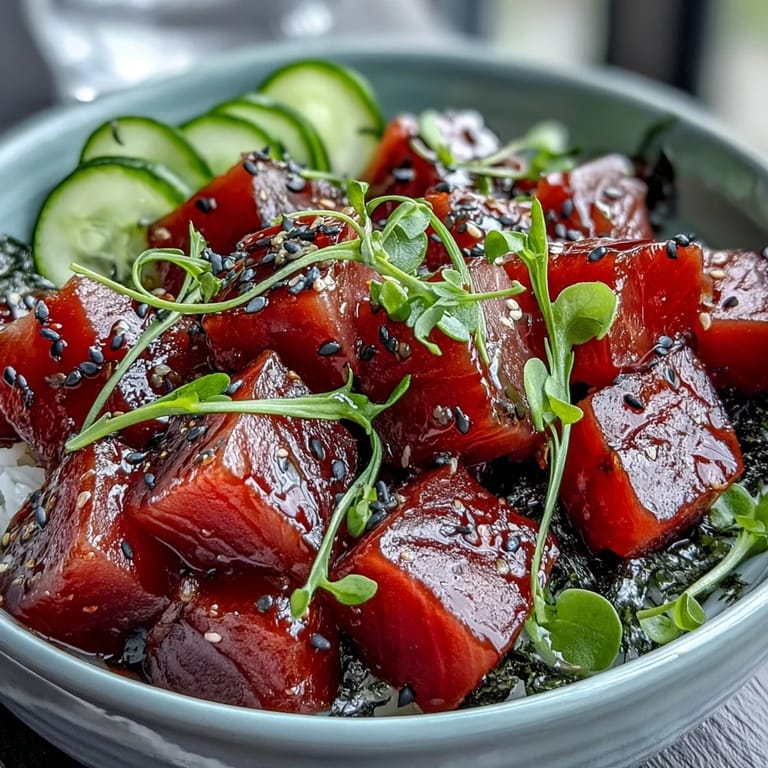
- Fan out the marinated tuna, nestle in the veggies, scatter the radishes and spring onions, tuck in avocado slices—make it your canvas.
- Add the Finishing Touches:
- Drop on the pickled ginger, snip nori over the top, shake extra sesame seeds, and sprinkle with microgreens if you’re fancy—serve right away for peak freshness.
 Save to Pinterest
  Save to Pinterest
 The first time I served this to my partner, the meal stretched lazily into the evening as we tweaked each bowl with more pickled ginger or nubs of nori. There was something effortless yet special about scooping up bright forkfuls while jazz played in the background—it felt like spring was right there with us at the table.
Customizing Your Poke Bowl
What I’ve learned is that poke bowls welcome improvisation—swap out the tuna for salmon or even tofu, and use whatever vegetables are peaking at the market that week. Let color guide you, and don’t be shy with garnishes; every mix brings a new twist, so trust your taste buds and have fun with it.
Serving and Pairing Suggestions
This dish is perfect with a chilled glass of white wine or a pot of cold green tea on the side. It’s light enough for lunch but filling enough for a happy dinner—the hardest part is not eating straight from the prep bowls before you plate.
Last Details Before You Dive In
Keep everything prepped and chilled for maximum crunch and flavor, especially if serving on a warm evening. A squeeze of lemon or a drizzle of spicy mayo can transform your bowl into something uniquely yours.
- Wet your knife before slicing the avocado for clean, smooth pieces.
- Don’t overmix the rice or you’ll lose its delicate texture.
- Marinate only what you plan to eat—poke is best super fresh.
 Save to Pinterest
  Save to Pinterest
 I hope this poke bowl brings the same burst of spring energy to your kitchen—don’t be surprised if it becomes your go-to for any sunny day. There’s just something uplifting about eating a meal you built, one colorful layer at a time.
Recipe FAQs
- → Is raw tuna safe to eat?
Use sushi-grade tuna from a reputable fishmonger, keep it cold, and consume soon after marinating. Proper sourcing and handling reduce risk when served raw or very lightly marinated.
- → How long should the tuna marinate?
About 8–12 minutes is enough to infuse ponzu and sesame flavors without over-softening the fish. Shorter marination preserves a clean, tuna-forward texture.
- → Can I substitute the tuna?
Yes—use sashimi-grade salmon for a similar texture, or firm tofu for a vegetarian-friendly bowl. Adjust marination time for delicate proteins accordingly.
- → Any tips for seasoning sushi rice?
Mix a small amount of rice vinegar and a pinch of salt into warm, just-cooked sushi rice and fold gently to avoid smashing the grains. Let it cool slightly before assembling.
- → What are good garnishes and add-ins?
Nori strips, toasted sesame seeds, microgreens and pickled ginger add texture and brightness. For heat, drizzle a touch of spicy mayo or chili oil sparingly.
- → How long will leftovers keep?
Store components separately when possible. Marinated raw tuna is best eaten within 24 hours refrigerated; assembled bowls are best same day to preserve texture.