 Save to Pinterest
 Last summer, my neighbor brought over a wooden board laden with crisp vegetables and creamy cheeses, set it on our patio table just as the afternoon light turned golden, and suddenly lunch became an event. There was something about the unhurried way she'd arranged everything—white feta cubes next to jewel-bright tomatoes, space left between each element like it was meant to breathe—that made me understand mezze boards aren't really about feeding people quickly. They're about creating a moment where everyone can graze, chat, and feel like they're somewhere sun-drenched and distant, even if it's just your backyard.
I made this board the night my sister announced she was moving overseas, and instead of getting sentimental over dinner, we just sat there for two hours picking at cukes and feta, laughing about silly things, the olives getting fewer and fewer as the evening cooled down. Food doesn't have to be complicated to matter, and that night it mattered because it gave us an excuse to linger together without the pressure of a formal meal.
Ingredients
- Feta cheese, 150 g cubed: The star that doesn't need cooking—tangy, salty, and substantial enough to anchor the board without weighing it down.
- Fresh mozzarella balls (bocconcini), 100 g drained: Mild and creamy, they offer a tender contrast to the briny feta and crisp vegetables.
- Cucumber, 1 large sliced into rounds: Cool and watery, it's the palate cleanser between bites and the bridge between cheese and vegetables.
- Cherry tomatoes, 1 cup halved: Sweet little bursts of umami; halving them keeps them from rolling everywhere and makes them easier to pop into your mouth.
- Yellow bell pepper, 1 sliced into strips: Adds brightness and a gentle sweetness without overwhelming the board's delicate balance.
- Red onion, 1/2 thinly sliced: A small amount goes a long way—its bite wakes up your palate and keeps everything from feeling too mild.
- Radishes, 1/2 cup sliced: Peppery and crisp, they add textural contrast and a subtle kick you don't expect until they're on your tongue.
- Kalamata olives, 1/2 cup pitted: Dark, earthy, and briny; nestle them in their own little pile so people who love them can go back for more, and those who don't can skip them entirely.
- Hummus, 1/3 cup: Creamy binding element that turns raw vegetables into something more substantial when you want it to be.
- Tzatziki, 1/3 cup: Cool and herbaceous, it's the gentle anchor that brings everything together without shouting.
- Crispbreads or pita wedges, 1 cup: The vehicles that let people build their own bites—more interactive and fun than a traditional plate.
- Extra virgin olive oil, 2 tbsp: A light drizzle awakens every ingredient without making the board greasy; don't skip this or the salt that follows.
- Fresh mint and dill sprigs: The finishing touch that says this board was made with intention, not just thrown together.
- Sea salt and cracked black pepper: Simple seasonings that make you taste each ingredient more clearly.
Tired of Takeout? 🥡
Get 10 meals you can make faster than delivery arrives. Seriously.
One email. No spam. Unsubscribe anytime.
Instructions
- Start with the cheese foundation:
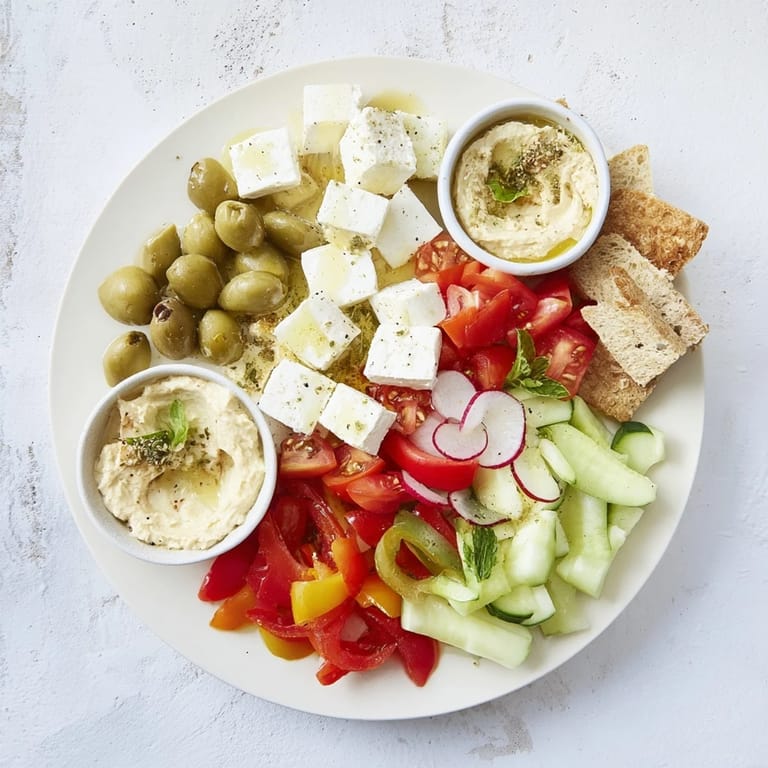
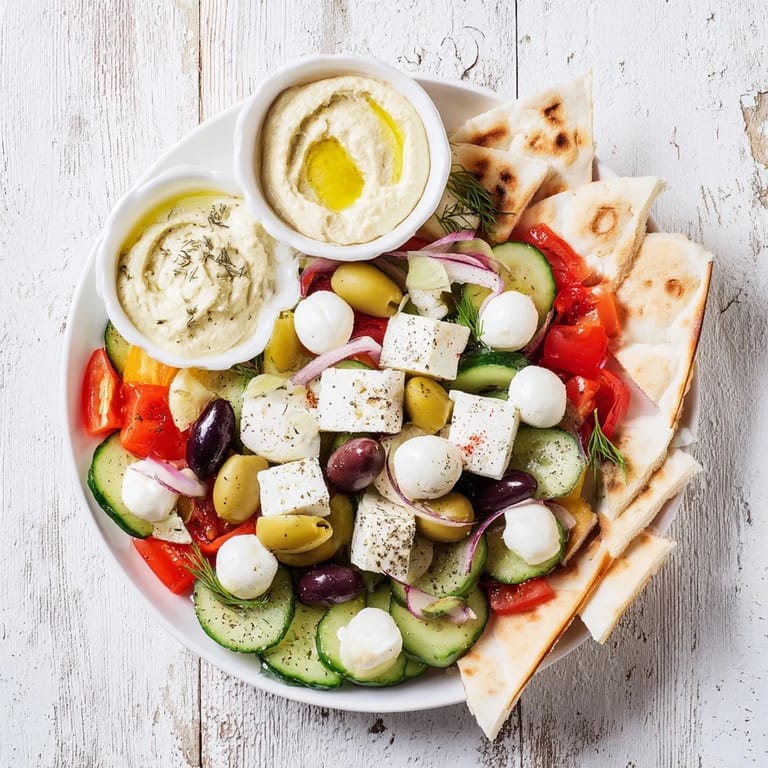
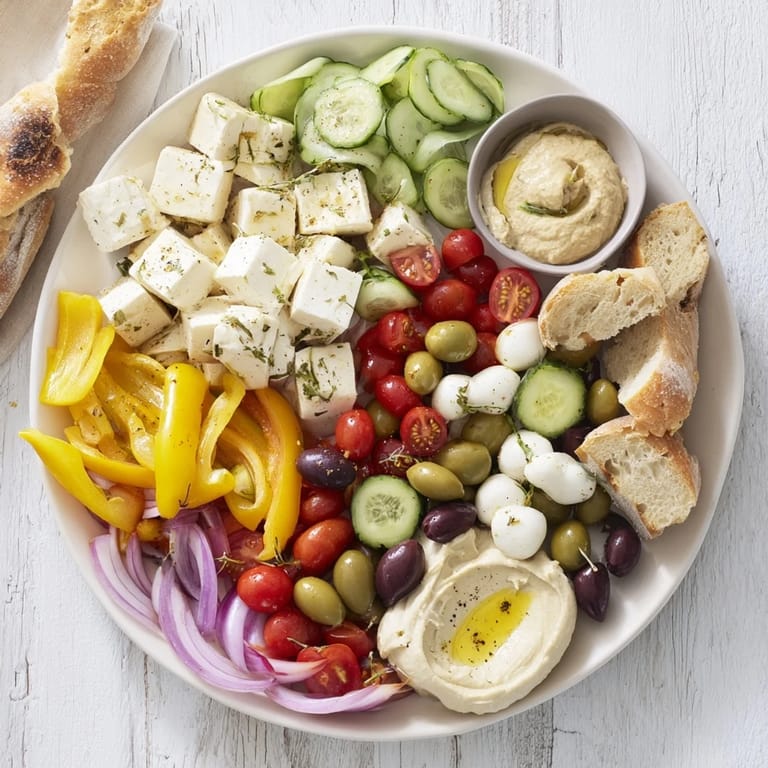
- Place your feta cubes and mozzarella balls in separate areas of your platter, leaving generous white space between them as if you're composing a painting. The emptiness is part of the design.
- Fan and cluster the vegetables:
- Arrange cucumber slices in a gentle arc, pile cherry tomatoes in one area, scatter pepper strips in another, and let the radishes and onion find their own little corner. Think of it like creating pockets of color that invite people to explore.
- Give the olives their moment:
- Either pile them into a small bowl placed on the board or let them settle in a cluster to themselves. Either way, they deserve their own real estate.
- Position your dips:
- Spoon hummus and tzatziki into small bowls and tuck them into open spaces on the board. They should look inviting but not lost in the shuffle.
- Dress with care:
- Drizzle just enough olive oil over the feta and vegetables to give them a subtle shine; too much and everything becomes slippery, too little and it feels unfinished. Scatter sea salt and cracked pepper over the top so every bite has seasoning.
- Add the green finishing layer:
- Tuck sprigs of fresh mint and dill around the board as if you're tucking in a friend—they catch the light, signal freshness, and make everything feel intentional.
- Serve immediately with crackers on the side:
- The moment a mezze board is fully dressed is its most beautiful, so get it to the table while everything is still crisp and the cheeses haven't started to sweat.
 Save to Pinterest
 I've learned that boards like these work best when you're not trying to impress anyone—they impress themselves. The beauty is in the simplicity and the generosity of the presentation, not in fancy techniques or rare ingredients. When you give people permission to graze and make their own combinations, they relax, they stay longer, and somehow that transforms a simple arrangement of vegetables into something memorable.
The Art of Arranging
The most important skill for a mezze board is actually not cooking—it's stepping back and looking at what you've created the way a guest will see it when they first walk in. If it looks generous and inviting rather than sparse or cluttered, you've succeeded. Think about color distribution: don't clump all the red on one side and all the green on the other, but let them talk to each other. The eye should travel and discover, not get overwhelmed all at once.
Timing and Temperature
Unlike most recipes, this one's success depends on timing in a different way—you want everything as cold and crisp as possible the moment it hits the table. Take your feta out of the fridge just before serving, chill your vegetables if they've been sitting out, and even put your board in the fridge for five minutes before you start arranging if you have time. Cold ingredients stay firmer, taste fresher, and honestly just feel more refreshing on a warm day.
Beyond the Basics
Once you understand the foundation of a mezze board, you can play with what goes on it depending on what you have on hand or what season it is. Winter boards might include roasted vegetables and harder cheeses; spring boards can lean into fresh herbs and tender lettuces. The structure stays the same, but the personality changes. This flexibility is what makes mezze such a forgiving, joyful thing to cook—or not cook, really.
- Try adding dried oregano or sumac to the feta for earthier depth without changing anything else.
- Swap the mozzarella for creamy burrata if you want something richer and more indulgent.
- Keep a vegan feta alternative on hand so you can always make a version that works for everyone at your table.
 Save to Pinterest
 A mezze board is really an invitation to slow down and enjoy the company of whoever you're feeding, even if that's just yourself on a sunny afternoon. There's permission built into the very structure of it—permission to take what you want, to leave what you don't, to linger, and to let a simple arrangement of good ingredients become the whole point of the meal.
Recipe FAQs
- → What cheeses are ideal for this Mediterranean platter?
Feta cheese cubed and fresh mozzarella balls (bocconcini) offer creamy texture and mild flavor, balancing the crisp vegetables perfectly.
- → How can I make this platter vegan-friendly?
Replace feta with plant-based alternatives and omit mozzarella or substitute it with vegan cheese options to maintain a creamy contrast.
- → What are some good accompaniments to serve with this spread?
Hummus, tzatziki, and assorted crispbreads or gluten-free pita wedges complement the fresh vegetables and cheeses beautifully.
- → How is the platter best presented for visual appeal?
Arrange items with ample space between groups on a large wooden board or platter to create an airy, sunlit display enhanced by fresh herbs and a drizzle of olive oil.
- → Can the flavor be enhanced with spices or herbs?
Sprinkling feta with dried oregano or sumac adds a fragrant touch, while fresh mint and dill sprigs brighten the overall taste.
- → Is this suitable for gluten-free diets?
Yes, by using gluten-free crispbreads or pita wedges, this platter remains gluten-free while retaining its refreshing flavors.