 Save to Pinterest
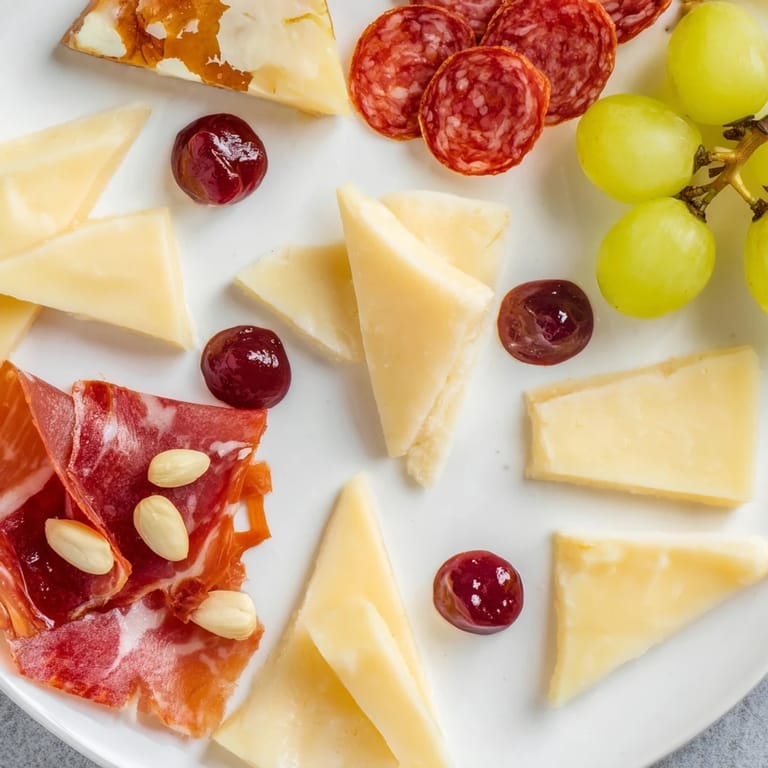
 I was arranging a board for friends last summer when I decided to ditch the usual random scatter. Instead, I grabbed a sharp knife and started cutting everything into deliberate shapes—triangles, rhombuses—and something shifted. What began as a slightly obsessive geometric exercise turned into something people couldn't stop talking about. The cuts made the board feel intentional, almost architectural, and suddenly everyone was picking pieces based on shape as much as flavor. It felt like edible geometry, and honestly, it was more fun to build than any board I'd made before.
My sister walked in while I was mid-cut and asked what on earth I was doing with such precision. By the time the board was finished, she was the first to grab a Manchego triangle and actually pause to appreciate it. That moment—where she slowed down because the board itself demanded attention—that's when I knew this approach really works. Food tastes better when you've put thought into how you serve it.
Ingredients
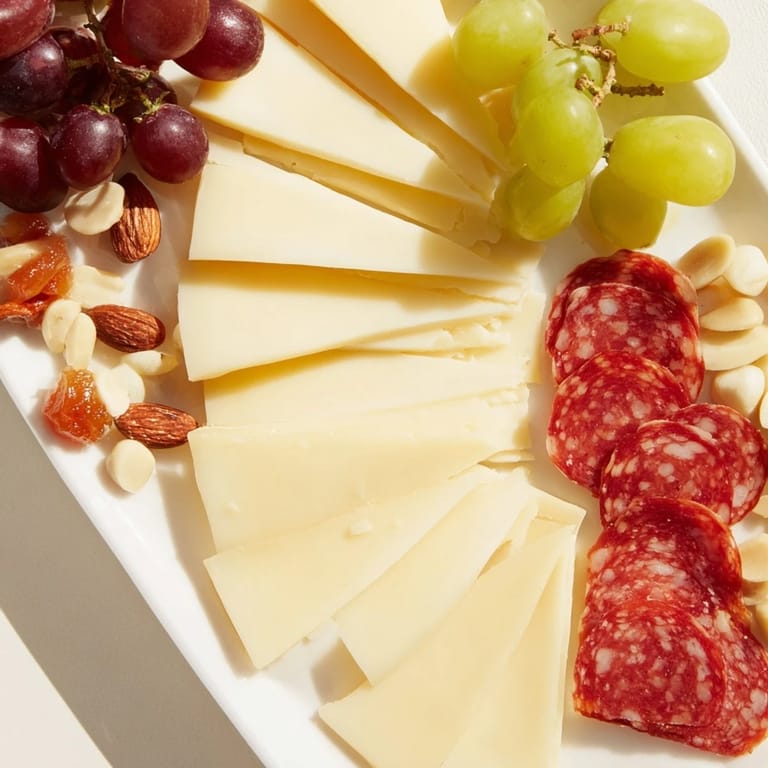
- Manchego cheese: 150 g, cut into triangles—this firm Spanish cheese holds its shape beautifully and brings a slightly nutty warmth to the board.
- Aged cheddar: 150 g, cut into triangles—look for aged varieties that are firm enough to cut cleanly without crumbling.
- Brie: 100 g, chilled and sliced into firm wedges—the chill is essential so it doesn't collapse mid-cut; let it come to room temperature on the board for the best texture.
- Gruyère: 100 g, cut into rhombuses—its subtle sweetness pairs perfectly with the acidic grapes.
- Prosciutto: 120 g, folded or cut into triangles—handle gently so the delicate meat doesn't tear as you shape it.
- Soppressata: 120 g, sliced and trimmed into rhombuses—the firm cured texture makes this ideal for clean geometric cuts.
- Chorizo: 100 g, sliced diagonally into rhombuses—its color and spice add visual and flavor contrast.
- Seedless red and green grapes: 1 small bunch each—they act as visual punctuation between the heavier elements.
- Dried apricots: 50 g, cut into diagonal pieces—a touch of natural sweetness and chew that balances the richness.
- Marcona almonds: 50 g—roasted and buttery, they fill gaps while adding textural contrast.
- Fig jam: 2 tbsp—a dollop of sweetness that transforms how the savory elements taste together.
- Gluten-free seed crackers: 100 g, broken into triangles—the seeds add earthiness without overwhelming delicate cheese flavors.
- Fresh rosemary or thyme sprigs: for garnish—they add aroma and a visual reminder that this is about thoughtful presentation.
Tired of Takeout? 🥡
Get 10 meals you can make faster than delivery arrives. Seriously.
One email. No spam. Unsubscribe anytime.
Instructions
- Set up your workspace:
- Lay out a sharp chef's knife, cutting board, and a small bowl of water—you'll dip the knife between cuts to keep it clean and prevent cheese from sticking. Having everything within arm's reach means you won't rush the cutting process.
- Cut the cheeses first:
- Start with the firm cheeses like Manchego and cheddar, cutting them into clean triangles with one confident motion per piece. Chill the Brie briefly, then slice it into wedges—these don't need to be perfect triangles, just triangular enough to fit the theme.
- Slice and shape the cured meats:
- Lay the prosciutto flat and fold it into rough triangles, or cut it if you prefer sharper lines. Slice the soppressata and chorizo on a slight diagonal, then trim the edges into clean rhombuses—this is where the board starts to feel intentional.
- Arrange on the board:
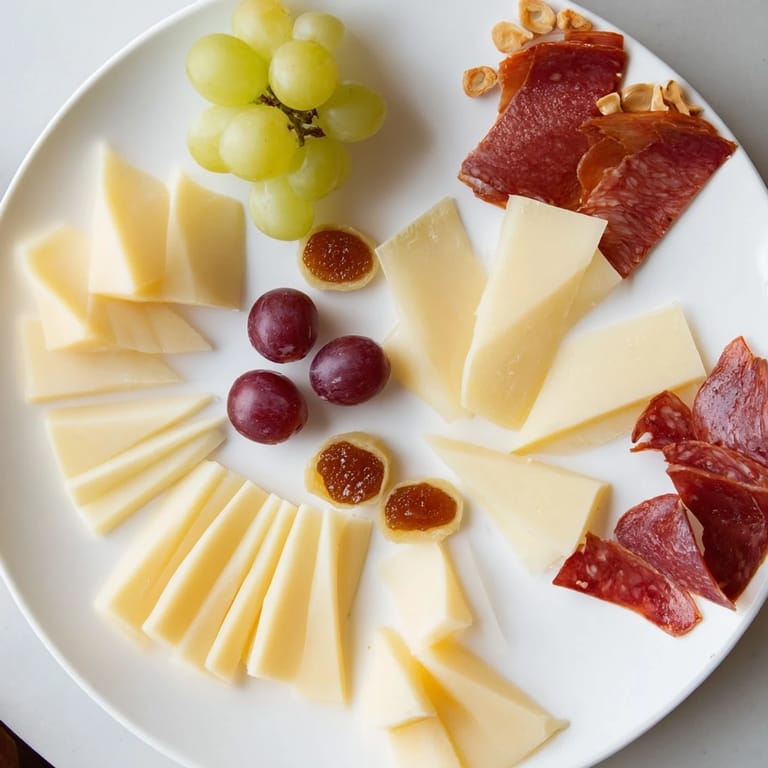
- Start with the largest pieces: cheeses and meats in an alternating pattern, mixing shapes so the eye moves around the board naturally. Think of it like placing puzzle pieces that guide the gaze.
- Add clusters of grapes and dried fruit:
- Group the grapes together in small piles, then tuck dried apricots around them. If you're feeling precise, cut a few apricots diagonally to echo the geometric theme.
- Fill the gaps:
- Scatter Marcona almonds into any open spaces—they ground the board and add visual rhythm. Place small dollops or spoonfuls of fig jam directly on the board or in a tiny bowl nestled into the arrangement.
- Crown it with crackers and herbs:
- Break the seed crackers into triangular pieces and arrange them in neat stacks or fan shapes along the edges. Tuck fresh rosemary or thyme sprigs throughout for color and aroma—these finish the presentation.
- Serve with intention:
- Set the board on a surface where people can gather around it, and serve immediately so all those crisp cuts stay sharp and defined. The geometric precision is the whole point.
 Save to Pinterest
 I watched someone actually compliment the presentation before tasting a single piece, and it hit me—this board isn't just about feeding people, it's about making them feel like you cared enough to think about every detail. That matters more than most of us admit.
The Power of Precision
There's something quietly satisfying about taking ingredients and arranging them with intention instead of intuition. When you cut everything into deliberate shapes, you're essentially saying this matters. Guests respond to that energy. They slow down, they look closer, and somehow the flavors taste more interesting when they arrive on a board that feels curated rather than casual.
Pairing and Balance
The beauty of a geometric board is how the shapes themselves create balance—sharp angles next to soft curves, bright colors next to deep tones. Serve this with a crisp Sauvignon Blanc or a dry rosé; the acidity cuts through the richness of the cheeses and meats in a way that feels refreshing. The fig jam acts as a sweet-savory anchor that ties everything together, so don't skip it even if you think it might be too much.
Make It Yours
The geometric theme is just a framework—swap in your favorite cheeses or experiment with different cured meats like bresaola or coppa, keeping the shape in mind as your guide. You can play with colors by adding darker cheeses or lighter ones, or introduce nuts you prefer over the Marcona almonds. The real magic is in the intentionality, not the specific ingredients.
- If you're cutting by hand, use a ruler as a gentle guide for proportional pieces without obsessing over perfection.
- Prep all your cutting ahead of time so you can focus on arrangement and won't be rushed as guests arrive.
- Remember that the crackers will soften slightly over time, so break them into triangles just before serving if you want maximum crunch.
 Save to Pinterest
 A geometric board is proof that the smallest thoughtful details transform how people experience food. Once you try it, you'll find yourself seeing geometry in everything you arrange.
Recipe FAQs
- → How do you achieve the geometric shapes on the board?
Use a sharp knife and a ruler or guide to carefully cut cheeses and meats into precise triangles and rhombuses, ensuring clean edges.
- → What types of cheeses work best for shaping?
Firm cheeses like Manchego, aged cheddar, Brie chilled until firm, and Gruyère are ideal as they hold geometric cuts without crumbling.
- → Can the meat selections be substituted?
Yes, other cured meats such as bresaola or coppa can be sliced similarly to fit the geometric theme while maintaining flavor variety.
- → What accompaniments complement the board?
Seedless grapes, dried apricots cut diagonally, Marcona almonds, and fig jam provide a balanced mix of sweetness, texture, and color.
- → How should the platter be served and stored?
Assemble just before serving to maintain fresh forms and textures. Keep refrigerated if there is a delay, but avoid storing assembled for long periods.
- → Are there allergen considerations?
This platter contains milk from cheeses, tree nuts in almonds, and potential sulfites from dried fruits and cured meats. Use gluten-free crackers as noted.