 Save to Pinterest
 I discovered this dish by accident on a Tuesday night when I had leftover kimchi in one container, a half-empty jar of tomato sauce, and suddenly remembered why I loved cooking in the first place—the freedom to break all the rules. My Korean grandmother would have gasped at pasta dressed with gochujang-tinged meat sauce, but somewhere between the sizzle of pork hitting hot oil and that first taste of spicy, creamy, umami-forward chaos, I understood that the best meals don't ask for permission.
The first time I served this to friends, I was nervous—fusion can land terribly, and I wasn't sure if the spicy-creamy combination would confuse their palates. But one friend took a bite, went quiet for a moment, and then asked for seconds before finishing the first bowl. That silence before the verdict felt like an eternity, but it told me everything.
Ingredients
- Ground pork: The fattier the better—it renders into the sauce and builds flavor as it cooks, making the ragu rich without extra cream.
- Napa cabbage kimchi with juice: Use a version you actually enjoy eating straight from the jar, because that fermented depth is what makes this sauce sing beyond any single ingredient.
- Onion, garlic, carrot, celery: The holy quartet that builds every good sauce, but here they're your flavor foundation before the kimchi chaos starts.
- Crushed tomatoes: Canned works beautifully and saves you hours of reducing fresh tomatoes down.
- Heavy cream or plant-based alternative: This softens the heat and ties all the wild flavors together into something creamy and elegant.
- Gochugaru: Optional but recommended—it adds color and a subtle extra dimension of heat that the kimchi juice alone might miss.
- Soy sauce: Just enough to whisper umami throughout, not enough to make it taste intentionally Asian fusion.
- Rigatoni or penne: Shapes with ridges or holes catch the sauce better than smooth pasta, letting each bite taste like you've already mixed everything.
Tired of Takeout? 🥡
Get 10 meals you can make faster than delivery arrives. Seriously.
One email. No spam. Unsubscribe anytime.
Instructions
- Build your base:
- Heat oil until shimmering, then add onion, carrot, and celery. Let them soften and sweeten for five minutes before you add anything else—this is where patience starts the flavor story.
- Wake up the aromatics:
- Garlic goes in for just one minute, just until the smell hits you and fills the kitchen with that warm, toasted note.
- Brown the pork:
- Break it into small pieces as it cooks so it creates texture in the sauce rather than large clumps. Listen for the sizzle to quiet down and watch for color to deepen across the meat.
- Introduce the kimchi:
- Add both the chopped kimchi and its juice, then let it soften in the heat for a few minutes. You'll smell the fermentation immediately—that's the magic happening.
- Build the sauce:
- Pour in tomatoes, soy sauce, gochugaru if using, and sugar. The sugar isn't sweetness—it's a brightness that lets you taste all the other flavors more clearly.
- Let it simmer:
- Fifteen to twenty minutes of uncovered simmering thickens everything and lets the flavors deepen and tangle together into something bigger than their individual parts.
- Cook your pasta:
- While the sauce bubbles away, get your pasta into salted boiling water and taste it obsessively in the last two minutes. Reserve that starchy pasta water before you drain—it's your secret weapon.
- Make it creamy:
- Lower the heat and stir in the cream with some of that reserved pasta water, creating a sauce silky enough to coat every ridge of pasta but not so thick it clogs.
- Marry it all:
- Toss the hot pasta right into the ragu and let them know each other for a minute, adding more pasta water if the sauce seems too tight or if it's sliding off the noodles.
 Save to Pinterest
 There's a moment in cooking this where the kitchen smells like something neither Italian nor Korean, but something entirely its own. A neighbor opened my door without knocking one evening while I was finishing a pot of this, took one breath, and asked what I was making. That moment—before the explanation, just the pure sensory reaction—made me realize that fusion isn't about identity confusion. It's about making something new that honors where it came from.
Spice and Heat, Your Way
The gochugaru is optional but I've never made this without it. If you're wary of spicy food, start with half a teaspoon and taste after simmering—you can always add more heat, but you can't take it back. For friends who want it cooler, I serve the finished pasta and let them add more cream at the table. If you want to lean into the heat, add a pinch more gochugaru when you stir in the cream, so it blooms in the warm liquid and distributes evenly.
Making It Your Own
One night I was out of heavy cream and grabbed coconut cream from the pantry instead. It made the sauce subtly sweet and more like a Thai-Italian situation, and honestly, it worked. Another time I added a splash of the kimchi's brine instead of the full two tablespoons of juice and the sauce tasted sharper, more aggressive in the best way. Don't be afraid to adjust the proportions based on what you have and what you're hungry for.
Serving and Storage
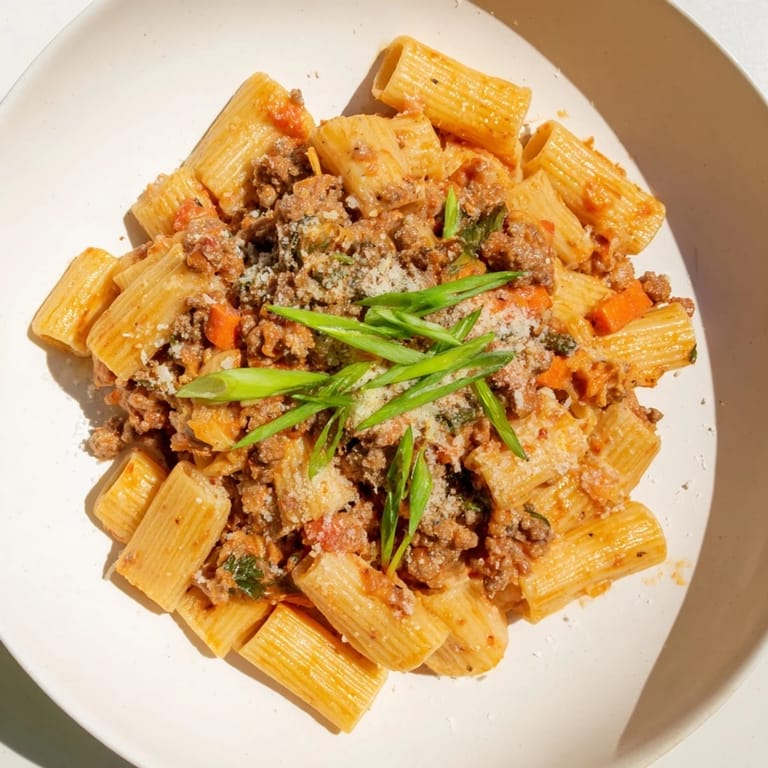
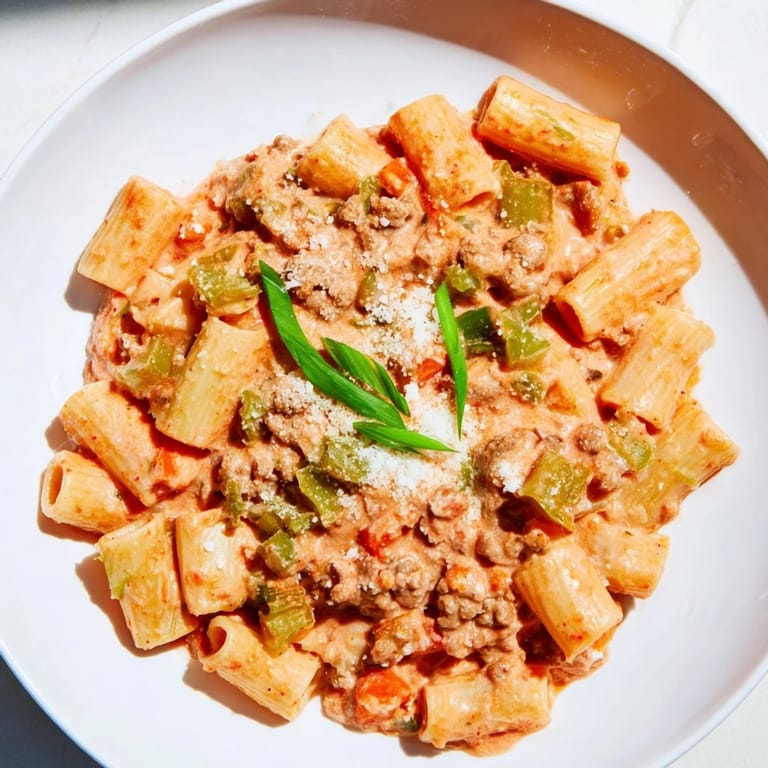
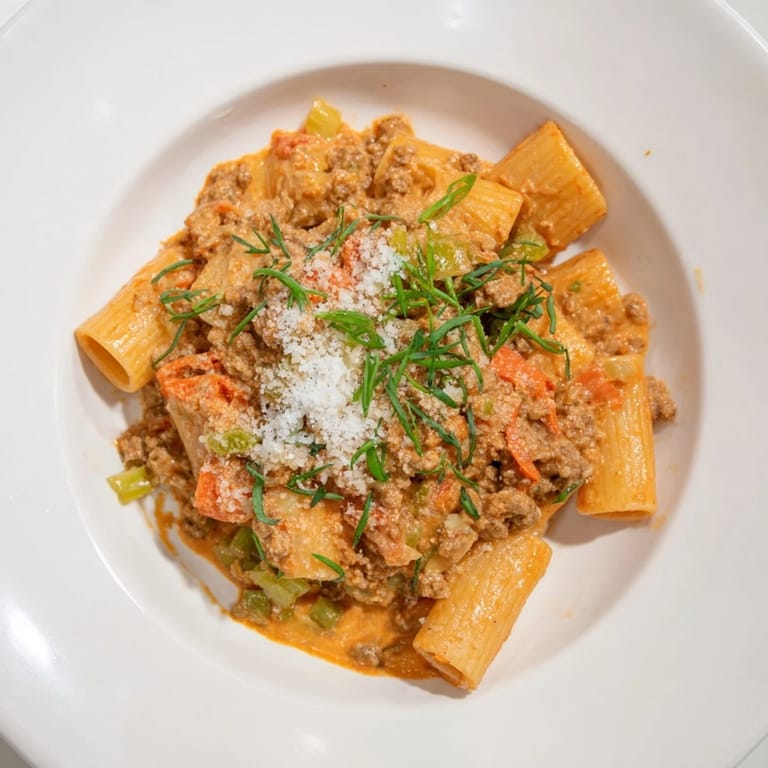
Serve this hot with scallions scattered over the top and Parmesan if you want to, though the cheese is more of a nice-to-have than a need. Leftovers keep for three or four days in the fridge and actually taste deeper the next day. You can reheat it gently in a pot with a splash of water or pasta water if it seems tight, and it loosens right back up without breaking or separating.
- If you're feeding vegetarians, swap the pork for plant-based ground meat and use coconut cream instead of dairy cream for richness.
- For a gluten-free version, use gluten-free pasta and swap regular soy sauce for tamari, which is naturally free of wheat.
- A chilled Lambrusco or slightly sweet Riesling cuts through the richness and complements the spice better than a heavy red wine would.
 Save to Pinterest
 This dish taught me that the best food comes from ignoring the rules just enough to listen to what you actually have and what you actually want. Make it, change it, serve it confidently—it'll never be wrong because it's entirely yours.
Recipe FAQs
- → What type of meat works best in this dish?
Ground pork or beef both work well, or a 50/50 blend for balanced flavor and texture.
- → Can I make this meal dairy-free?
Yes, substitute heavy cream with unsweetened plant-based cream and omit or replace Parmesan with a vegan alternative.
- → How spicy is the kimchi ragu pasta?
The spice level can be adjusted by varying the amount of gochugaru (Korean chili flakes) and kimchi used.
- → What pasta types are recommended?
Rigatoni or penne are ideal as their shapes hold the creamy, flavorful sauce well.
- → What can I use to enhance the sauce’s creaminess?
Adding reserved pasta water along with cream helps create a smooth, silky sauce that clings to the pasta.
- → Are there any suggested wine pairings?
Try a chilled Lambrusco or a fruity Riesling to complement the spicy and creamy elements.